

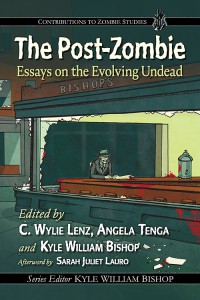
The Post-Zombie
Essays on the Evolving Undead
Edited by C. Wylie Lenz, Angela Tenga and Kyle William Bishop


 (0 vote)
Average rating:
| 0 | rating |  = We can do without = We can do without |
| 0 | rating |  = Good book = Good book |
| 0 | rating |  = Excellent book = Excellent book |
| 0 | rating |  = Unique / a reference = Unique / a reference |
Your rating: -
Book Presentation:
The zombie remains a popular and versatile cultural figure in both the United States and countries around the world, but the living dead creatures of today have come a long way from the shambling corpses depicted by George A. Romero. While traditional zombie monsters continue to flourish—thanks in part of the ongoing popularity of The Walking Dead universe—the global community now features reanimated zombies, resurrected zombies, protagonist zombies, robotic zombies, romantic zombies, fake zombies, zombie-adjacent monsters and post-zombie zombies. This collection of scholarly essays considers recent and contemporary examples of zombies in fiction, literature, popular culture, and politics from around the world and makes the case that, despite the evolution of the undead, the zombie remains an important allegorical feature of horror fiction, satire and ideological perspectives.
About the authors:
Wylie Lenz is an associate professor of English in the humanities and social sciences department at Florida Polytechnic University in Lakeland, Florida.
Angela Tenga is an associate professor at Florida Institute of Technology. Her classes focus on literature, culture, and history, while her research interests include representations of the monstrous, the construction of criminality (especially serial killers) in fiction, and early English literature.
Kyle William Bishop is an associate professor of English and film studies and serves as the Honors Program director at Southern Utah University in Cedar City, Utah. He has presented and published on a number of zombie-related texts and has authored two other monographs with McFarland.
> From the same authors:
Plant Horror (2017)
Approaches to the Monstrous Vegetal in Fiction and Film
Dir. Dawn Keetley and Angela Tenga
American Zombie Gothic (2010)
The Rise and Fall (and Rise) of the Walking Dead in Popular Culture
> On a related topic:
The Politics of Monstrous Figures in Contemporary Cinema (2025)
Witches, Zombies, and Cyborgs Re-enchanting the Ends of the World
Postracial Fantasies and Zombies (2024)
On the Racist Apocalyptic Politics Devouring the World
The Anthropocene and the Undead (2024)
Cultural Anxieties in the Contemporary Popular Imagination
Dir. Simon Bacon
Prepare for Zombies, Survive a Flood (2023)
Natural Disaster Lessons from Undead Cinema
Transnational Zombie Cinema, 2010 to 2020 (2023)
Readings in a Mutating Tradition
The Science of Monsters (2019)
The Truth about Zombies, Witches, Werewolves, Vampires, and Other Legendary Creatures
by Meg Hafdahl and Kelly Florence
 Back
Back

