


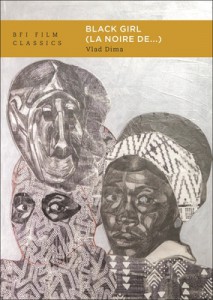
Black Girl (La Noire de...)
de Vlad Dima


 (0 vote)
Moyenne des votes :
| 0 | vote |  = On peut s'en passer = On peut s'en passer |
| 0 | vote |  = Bon livre = Bon livre |
| 0 | vote |  = Excellent livre = Excellent livre |
| 0 | vote |  = Unique / une référence = Unique / une référence |
Votre vote : -
Description de l'ouvrage:
Ousmane Sembène was one of the greatest, most groundbreaking filmmakers in the history of cinema, an acclaimed novelist, and the most renowned African director of the twentieth century. Black Girl was his brilliant, blistering debut. Released in 1966, it won the Prix Jean Vigo at the Cannes Film Festival that year. The film is about a young Senegalese woman, played powerfully by M'Bissine Th r se Diop, who moves to France to work for a wealthy white family as a nanny, but quickly discovers that life in their apartment is a prison, both figuratively and literally; but it is also a searing, nuanced critique of the lingering colonialism in the supposedly postcolonial world.
Vlad Dima's study of Black Girl argues that the film helped to map the future of African cinema. He situates it within its postcolonial context, considering its adaptation from the eponymous short story first published in 1962. He examines the performances of Mbissine Th r se Diop (Diouana), Anne-Marie Jelinek (Madame) and Robert Fontaine (Monsieur), considering the ways in which they embody or subvert postcolonial, French archetypes, and then goes on to examine the technical aspects of Sembene's filmmaking, such as his innovative use of framing and aural composition. Finally, he traces the film's lasting influence on African cinema, from Semb ne's own Xala (1975), to Safi Faye's Mossane (1996), Joseph Ga Ramaka's Karmen Ge (2001), Jean-Pierre Bekolo's Saignantes (2005), and Mati Diop's Atlantics (2019).
À propos de l'auteur :
Vlad Dima is Professor and Chair of the Department of African American Studies at Syracuse University, USA. His books include Sonic Space in Djibril Diop Mambety's Films (2017), The Beautiful Skin: Football, Fantasy, and Cinematic Bodies in Africa (2020), and Meaninglessness: Time, Rhythm, and the Undead in in Postcolonial Cinema (2022). He has published numerous articles, mainly on French and francophone cinemas, but also on Francophone literature, comics, American cinema, and television.
Voir le site internet de l'éditeur BFI Publishing
Voir la fiche de Black Girl (1966) sur le site IMDB ...
> Du même auteur :

Sonic Space in Djibril Diop Mambety's Films (2017)
de Vlad Dima
Sujet : Director > Djibril Diop Mambety
> Sur un thème proche :


Ousmane Sembene (2015)
Writer, Filmmaker, and Revolutionary Artist
de Ernest Cole et Oumar Cherif Diop
Sujet : Director > Ousmane Sembène
The Films of Ousmane Sembène (2012)
Discourse, Culture, and Politics
Sujet : Director > Ousmane Sembène

 Retour

