


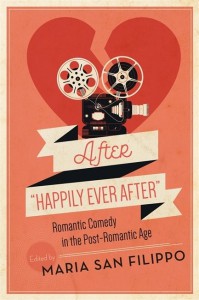
After "Happily Ever After"
Romantic Comedy in the Post-Romantic Age
Edited by Maria San Filippo


 (0 vote)
Average rating:
| 0 | rating |  = We can do without = We can do without |
| 0 | rating |  = Good book = Good book |
| 0 | rating |  = Excellent book = Excellent book |
| 0 | rating |  = Unique / a reference = Unique / a reference |
Your rating: -
Book Presentation:
Explores romantic comedy’s revitalizing response to shifting sexual and social mores of the past decade.
In defiance of the alleged "death of romantic comedy," After "Happily Ever After": Romantic Comedy in the Post-Romantic Age edited by Maria San Filippo attests to rom-com's continuing vitality in new modes and forms that reimagine and rejuvenate the genre in ideologically, artistically, and commercially innovative ways. No longer the idyllic fairy tale, today's romantic comedies ponder the realities and complexities of intimacy, fortifying the genre's gift for imagining human connection through love and laughter.
It has often been observed that the rom-com's "happily ever after" trope enables the genre to avoid addressing the challenges of coupled life. This volume's contributors confront how recent rom-coms contend with a "post-romantic age" of romantic disillusionment and seismically shifting emotional and relational bonds. Fifteen chapters contemplate the resurgence of the "radical romantic comedy" and uncoupling comedy, new approaches in genre hybridity and serial narrative, and how recent rom-coms deal with divisive topical issues and contemporary sexual mores from reproductive politics and marriage equality to hook-up culture and technology-enabled sex. Rom-coms remain underappreciated and underexamined—and still largely defined within Hollywood's parameters of culturally normative coupling and its persistent marginalization of racial and sexual minorities. Making the case for taking romantic comedy seriously, this volume employs critical perspectives drawn from feminist, queer, postcolonial, and race studies to critique the genre's homogeneity and social and sexual conservatism, recognizing innovative works inclusive of LGBTQ people, people of color, and the differently aged and abled.
Encompassing a rich range of screen media from the last decade, After "Happily Ever After" celebrates works that disrupt and subvert rom-com fantasy and formula so as to open audience's eyes along with our hearts. This volume is intended for all readers with an interest in film, media, and gender studies.
About the Author:
Maria San Filippo is associate professor of media studies at Emerson College and editor of New Review of Film and Television Studies. She has authored the Lambda Literary Award–winning The B Word: Bisexuality in Contemporary Film and Television and Provocauteurs and Provocations: Screening Sex in 21st Century Media.
Press Reviews:
One truth espoused by the contributors to this collection of provocative essays is that the cinematic romantic comedy of the past is dead, if not quite buried. The present, the reader is assured, is a post-romcom age. Much of this is overladen with a self-reflexive cynicism, born of a "crisis of intimacy" (Beatriz Ortiz). This volume offers much to enjoy and much to ponder.
-W. A. Vincent
The essays in this book document a level of generic activity that belies the death notices so often read out for romantic comedy. Moreover, they do so with analytical skill and rhetorical force.
-Diane Negra
With a fresh focus on rom-coms that make use of alternative distribution practices, disrupt conventional plotlines, or are non-traditional in representational content—featuring queer, ethnically diverse, and/or ‘un-couples’—After ‘Happily Ever After’ cogently illustrates that there is still much to be learned from and about this oft-sidelined genre.
-Suzanne Leonard
A scholarly comedy in two prologues and three acts, this wonderful book starts by resisting the predictions of the doomsayers about the death of comedy and ends up being a song to the vitality, diversity, and apparently endless ability of romantic comedy to shift shape, to adapt, to survive—like life itself if viewed through a comic lens.
-Celestino Deleyto, Author of the Secret Life of Romantic Comedy
> From the same author:

> On a related topic:


Terms of Endearment (1998)
Hollywood Romantic Comedy of the 1980s and 1990s
Dir. Peter William Evans and Celestino Deleyto
Subject: Genre > Comedy/Humor


Falling in Love at the Movies (2024)
Rom-Coms from the Screwball Era to Today
Subject: Genre > Romantic films
Guilty Pleasures (2023)
European Audiences and Contemporary Hollywood Romantic Comedy
Subject: Genre > Romantic films
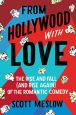
From Hollywood with Love (2022)
The Rise and Fall (and Rise Again) of the Romantic Comedy
by Scott Meslow
Subject: Genre > Romantic films
 Back
Back

