

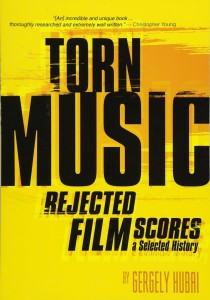
Torn Music
Rejected Film Scores, a Selected History


 (0 vote)
Average rating:
| 0 | rating |  = We can do without = We can do without |
| 0 | rating |  = Good book = Good book |
| 0 | rating |  = Excellent book = Excellent book |
| 0 | rating |  = Unique / a reference = Unique / a reference |
Your rating: -
Book Presentation:
A film is nearly finished and ready to make its way into theatres, when one or more of its prime movers -- producer, director, studio brass -- decides that it just does not 'feel right and hits the brakes. What can be done quickly to alter the movie's complexion? The most obvious option is to change the last element added to the film -- its music! So, often regardless of whether the film actually needs a new score, a new composer is hired at the last minute to replace the previous composer's heartfelt work. Film scores are rejected and replaced for every conceivable reason -- style, quality, a test-audiences reaction, a composer's name recognition, the picture's re-editing. Sometimes the change improves a film; often it does not. Either way, such replacements are more common than most moviegoers imagine, and no composer, from the novice to the most famous and respected, is immune. In this book (which takes its title from the film Torn Curtain, whose famous score replacement put an end to the long and fruitful collaboration between director Alfred Hitchcock and composer Bernard Herrmann), film historian Gergely Hubai recounts the often strange and surprising stories behind 300 rejected and replaced scores dating from the 1930s through the 2000s. In these behind-the-scenes tales, dedication collides with miscommunication, musical geniuses clash with the tone-deaf, commercialism brawls with artistic purity, and a lot of hard work goes unrewarded. The movies discussed range from the most popular to the all-but-forgotten, and from high art to lowbrow fare; they even include a handful of TV shows and a videogame.
> On a related topic:
Music for Superheroes (2025)
Film and Television Scores Since 1940
Haunted Soundtracks (2025)
Audiovisual Cultures of Memory, Landscape, and Sound
Dir. Kevin J. Donnelly and Aimee Mollaghan
Hearing Eyes, Seeing Ears (2025)
Collected Writings on Music in Audiovisual Culture
Music Films (2024)
Documentaries, Concert Films and Other Cinematic Representations of Popular Music
by Neil Fox
The Music of Space (2024)
Scoring the Cosmos in Film and Television
 Back
Back

