


Why Docudrama?
Fact-Fiction on Film and TV
Edited by Alan Rosenthal

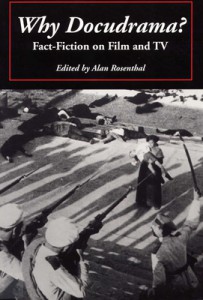

 (0 vote)
Average rating:
| 0 | rating |  = We can do without = We can do without |
| 0 | rating |  = Good book = Good book |
| 0 | rating |  = Excellent book = Excellent book |
| 0 | rating |  = Unique / a reference = Unique / a reference |
Your rating: -
Book Presentation:
When the 1990 English docudrama Who Bombed Birmingham? cast serious doubt on the guilt of six men convicted of bombing two British pubs in 1974, Prime Minister Margaret Thatcher declared that a "television program alters nothing." But, as Alan Rosenthal concludes, Thatcher was wrong. The film engendered a new inquiry that led to the release of the convicted men.
Rosenthal notes that docudrama wields more influence than the average documentary and that "reality-based stories taken from topical journalism are the most popular drama genre on U.S. and British television today." This three-part collection of diverse and provocative essays addresses the dominant questions and controversies the genre poses.
Defining and examining the rationale of docudrama, the nine essayists in the first part discuss the history and development of docudrama on TV and in film; they also consider the place of truth in docudrama, the main critiques of the form, and the audience's susceptibilities and expectations. In investigating the actual filmmaking process, the eight essays in the second part focus on how "docudrama as a 'commodity' is created in the United States and England." Part essay, part case study, and part interview, this section also explores how Hollywood and the commercial networks as well as producers and writers work and think. The final part presents an in-depth critique of a number of controversial docudramas that have helped form and shape public opinion, including Battleship Potemkin, Roots, Reds, JFK, Mississippi Burning, Schindler's List, and In the Name of the Father.
In addition to Rosenthal, the contributors are John Corner, George F. Custen, David Edgar, Leslie Fishbein, George MacDonald Fraser, Todd Gitlin, Douglas Gomery, Richard Grenier, Sumiko Higashi, Tom W. Hoffer, Jerry Kuehl, Steve Lipkin, Yosefa Loshitsky, Ian McBride, Richard Alan Nelson, Conor Cruise O'Brien, Derek Paget, Robert A. Rosenstone, Betsy Sharkey, Irene Shubik, Jeff Silverman, D. J. Wenden, Sita Williams, and Leslie Woodhead.
About the Author:
Alan Rosenthal is the author of Writing, Directing, and Producing Documentary Films and Videos. He is a documentary filmmaker, teacher, and author active in Israel, Britain, and the United States and a winner of the George Foster Peabody Award for journalism for Out of the Ashes. His films have appeared on Channel 4 UK and Israeli television and on the American networks NBC, PBS/WNET, and ABC.
See the publisher website: Southern Illinois University Press
> From the same author:
The Documentary Diaries (2016)
Working Experiences of a Non-Fiction Filmmaker
Subject: Genre > Documentary
From Chariots of Fire to The King's Speech (2014)
Writing Biopics and Docudramas
Subject: Technique > Scriptwriting
> On a related topic:
Holocaust Representations in Animated Documentaries (2025)
The Contours of Commemoration
Subject: Genre > Historical films
Law, Justice, and Society in the Medieval World (2025)
An Introduction Through Film
Dir. Esther Liberman Cuenca, M. Christina Bruno and Anthony Perron
Subject: Genre > Historical films
Reading Gender (2025)
Studies on Medieval Manuscripts and Medievalist Movies
Subject: Genre > Historical films
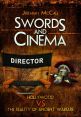
Swords and Cinema (2025)
Hollywood vs the Reality of Ancient Warfare
Subject: Genre > Historical films
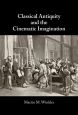
Classical Antiquity and the Cinematic Imagination (2024)
Subject: Genre > Historical films
Cinema Medievalia (2024)
New Essays on the Reel Middle Ages
Dir. Kevin J. Harty and Scott Manning
Subject: Genre > Historical films
Abraham Lincoln and Women in Film (2024)
One Hundred Years of Hollywood Mythmaking
by Frank J. Wetta and Martin A. Novelli
Subject: Genre > Historical films
 Back
Back

