


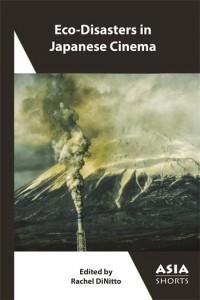
Eco-Disasters in Japanese Cinema
Sous la direction de Rachel DiNitto


 (0 vote)
Moyenne des votes :
| 0 | vote |  = On peut s'en passer = On peut s'en passer |
| 0 | vote |  = Bon livre = Bon livre |
| 0 | vote |  = Excellent livre = Excellent livre |
| 0 | vote |  = Unique / une référence = Unique / une référence |
Votre vote : -
Description de l'ouvrage:
Eco-Disasters in Japanese Cinema explores disaster as a powerful means for addressing environmental crises. It is the first volume dedicated to a multi-genre analysis of environmental themes in Japanese cinema. The films examined cover 1954-2020 and include documentaries, monster films, cult films, studio blockbusters, and activist cinema. The chapters highlight important moments in disaster ecocinema, introduce films not well known outside of Japan, and analyze films not previously read through an environmental lens. Chapters are organized under intersecting themes that address the slow and fast violence of local and planetary environmental destruction: toxicscapes, contaminated futures and childhoods, nuclear anxiety and violence, and ruined and apocalyptic landscapes. This volume showcases a range of directors, eras, audiences, and genres and illustrates the profound diversity of Japanese films that feature systemic assaults on the environment.
À propos de l'auteur :
Rachel DiNitto is a Professor of Japanese literary and cultural studies at University of Oregon, with a focus on the nuclear environmental humanities. She researches contemporary cultural production (literature, film, manga) about the 2011 triple disaster in Japan. Her book, Fukushima Fiction: The Literary Landscape of Japan’s Triple Disaster won the Choice Magazine Outstanding Academic Title in 2020. She has published on the films of this disaster and postwar Japan. See her work in The Asia-Pacific Journal, Japan Forum, and her chapter “Toxic Interdependencies: 3/11 Cinema” in The Japanese Cinema Book. She is working on a new environmental humanities monograph titled "Environmental Echoes and Nuclear Traces" that pairs post-Fukushima fiction with novels and short stories from earlier eras of environmental and nuclear harm.
Revue de Presse:
Ranging from Godzilla to Evangelion, Miyazaki Hayao to Kore-eda Hirokazu, and blockbuster disaster movies to somber documentaries and dreamy melodramas, Eco-Disasters in Japanese Cinema is a diverse, thought-provoking, and endlessly fascinating exploration of how environmental catastrophes have haunted, incited, and inspired Japan’s filmmakers and animators. Theoretically sophisticated but thoroughly accessible, this compact volume is a rich resource for scholars, a perfect text for use in film, environmental, and Japanese studies classrooms, and an eye-opening read for all fans of Japanese cinema and popular culture. William M. Tsutsui, author of Godzilla on My Mind and Japanese Popular Culture and Globalization
Eco-Disasters in Japanese Cinema is an exemplary collection of essays that takes us into a fascinating spectrum of film genres, prompting us to rethink, expand, and redefine the scope of ecocinema in both Japanese and broader global contexts. It also serves as a very timely contribution to the growing field of environmental humanities, engaging closely with some of its most pivotal concepts—from the slow violence of nuclear disasters, the giant monster as a hyperobject, to the vital materiality of toxic waste. Kiu-Wai Chu, Nanyang Technological University
A remarkable volume covering nearly seventy years of Japanese cinematic production. A most welcome and timely addition to Japanese studies, environmental humanities, and film studies, Eco-Disasters brings together exceptional scholarship on films the clear focus of which is environmental trauma and on those where environmental themes are more nuanced but no less important. A must read for students and scholars alike! Karen Thornber, Harvard University
Voir le site internet de l'éditeur Association for Asian Studies
> Sur un thème proche :
Kong, Godzilla and the Living Earth (2022)
Gaian Environmentalism in Daikaiju Cinema
Sujet : Genre > Disaster films

Apocalypse Then (2017)
American and Japanese Atomic Cinema, 1951–1967
de Mike Bogue
Sujet : Genre > Disaster films

Monsters, Catastrophes and the Anthropocene (2022)
A Postcolonial Critique
Sujet : Genre > Disaster films
Climate Change in Popular Culture (2022)
A Warming World in the American Imagination
Sujet : Genre > Disaster films
Japan's Green Monsters (2018)
Environmental Commentary in Kaiju Cinema
de Sean Rhoads et Brooke McCorkle
Through a Nuclear Lens (2024)
France, Japan, and Cinema from Hiroshima to Fukushima

Monstrous Nature (2016)
Environment and Horror on the Big Screen

 Retour

