


Postfeminist Whiteness
Problematising Melancholic Burden in Contemporary Hollywood

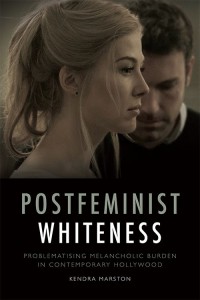

 (0 vote)
Average rating:
| 0 | rating |  = We can do without = We can do without |
| 0 | rating |  = Good book = Good book |
| 0 | rating |  = Excellent book = Excellent book |
| 0 | rating |  = Unique / a reference = Unique / a reference |
Your rating: -
Book Presentation:
Addresses postfeminist media culture’s emphasis on socioeconomic privilege
In the first extended study into the politics of whiteness inherent within postfeminist cinema, Kendra Marston interrogates representations of melancholic white femininity in contemporary Hollywood cinema, arguing that the ‘melancholic white woman’ serves as a vehicle through which to explore the excesses of late capitalism and a crisis of faith in the American dream. This figure may be idealised or scapegoated within these films, yet strategic performances of gendered melancholia may produce benefits for white female directors and stars disadvantaged within a patriarchal industry. Examining film genres including the tourist romance, the fantasy film and the psychological thriller, the book also contains case studies of films like The Virgin Suicides, Blue Jasmine, Gone Girl and The Girl on the Train.
Case studies include:
• Gone Girl (David Fincher 2014)
• The Girl on the Train (Tate Taylor 2016)
• The Virgin Suicides (Sofia Coppola 1999)
• Marie Antoinette (Sofia Coppola 2006)
• Lost in Translation (Sofia Coppola 2003)
• Blue Jasmine (Woody Allen 2013)
• Black Swan (Darren Aronofsky 2010)
• Pirates of the Caribbean (Gore Verbinski 2003, 2006, 2007)
• Alice in Wonderland (Tim Burton 2010)
• Alice Through the Looking Glass (James Bobin 2016)
• Eat Pray Love (Ryan Murphy 2010)
• Under the Tuscan Sun (Audrey Wells 2003)
About the Author:
Kendra Marston completed her PhD in the School of Communication and Arts at the University of Queensland, Australia. Her research interests include critical race and whiteness studies, postfeminist media studies, Hollywood cinema, stardom and celebrity and costume and cinema. She has published in Cinema Journal, Quarterly Review of Film and Video, Film, Fashion & Consumption.
Press Reviews:
Marston’s interrogation of white female melancholy in postfeminist cinema is groundbreaking work that should be required reading for those in the film industry as well as for those in academia.– G. A. Foster, University of Nebraska--Lincoln, CHOICE
A significant advance in the literature on postfeminist popular culture, Postfeminist Whiteness deftly theorizes the recurrent figure of the female screen melancholic and her function in assessing/managing the failures of capitalism. The book will be an indispensable resource for understanding contemporary dynamics of gender, race and cinema.– Professor Diane Negra, Film Studies and Screen Culture, University College Dublin
> On a related topic:
The Cultural Politics of Contemporary Hollywood Film (2019)
Power, Culture, and Society
by Chris Beasley and Heather Brook
Subject: Sociology


Feminist Visions (2026)
Tracing Feminist Epistemologies in Contemporary Film and Television
Dir. Hélène Charlery and Cristelle Maury
Subject: Sociology



Ambiguous Cinema (2024)
From Simone de Beauvoir to Feminist Film-Phenomenology
by Kelli Fuery
Subject: Sociology
 Back
Back

