


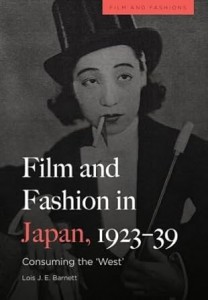
Film and Fashion in Japan, 1923-39
Consuming the 'West'
by Lois Barnett


 (0 vote)
Average rating:
| 0 | rating |  = We can do without = We can do without |
| 0 | rating |  = Good book = Good book |
| 0 | rating |  = Excellent book = Excellent book |
| 0 | rating |  = Unique / a reference = Unique / a reference |
Your rating: -
Book Presentation:
The book examines the interaction between the audience member and Japan's film and fashion industries between 1923 and 1939, focusing on Western-inspired fashion objects (as opposed to indigenous Japanese items, such as the kimono). This interdisciplinary book examines the semiotics of dress onscreen within Japan’s transcultural media climate, consulting not only film- or fashion-related theoretical bases but also historical and gender-based approaches. The work consults surviving films, print media and advertising materials, allowing insights into lost films and the period's commercial context.
The book discusses the role of fashion consumption in defining emergent modern identities and their relationships with new spaces, questioning their arising in Japan and worldwide. Key areas include the expressive Modern Girl image (the Japanese equivalent of the Hollywood flapper); the relationship between the body and sportswear and hybridised dress styles (which combined Japanese and Western-influenced aesthetics); and menswear in the early work of director Ozu Yasujirō.
About the Author:
Lois J. E. Barnett is a Postdoctoral Research Associate at the School of Oriental and African Studies, University of London (SOAS).
Press Reviews:
This book is a fascinating examination of the market condition for Japanese cinema in a major period of transition. Through detailed historical research it pays attention to the intersection of the film and fashion industries to excavate a vital story of changing sartorial styles and their cultural and social meanings. -- Julian Stringer, University of Nottingham
> On a related topic:
Transpacific Convergences (2022)
Race, Migration, and Japanese American Film Culture before World War II
by Denise Khor
Subject: Countries > United States

Powers of the Real (2019)
Cinema, Gender, and Emotion in Interwar Japan
Nippon Modern (2008)
Japanese Cinema of the 1920s and 1930s

Imperial Screen (2003)
Japanese Film Culture In The Fifteen Years War, 1931-1945
The Costumes of Hollywood (2025)
Highlights from The Collection of Motion Picture Costume Design
by Coleen Scott and Larry McQueen
The Costume House (2025)
The inside story of Cosprop - From a Room with a View to Game of Thrones
 Back
Back

