


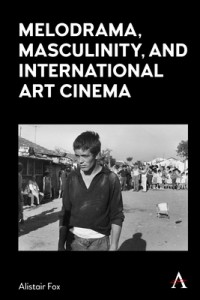
Melodrama, Masculinity and International Art Cinema
by Alistair Fox


 (0 vote)
Average rating:
| 0 | rating |  = We can do without = We can do without |
| 0 | rating |  = Good book = Good book |
| 0 | rating |  = Excellent book = Excellent book |
| 0 | rating |  = Unique / a reference = Unique / a reference |
Your rating: -
Book Presentation:
To date, masculinity has tended to be presented in cinema studies as a monolithic category that serves the interests of a hegemonic, normative patriarchy. This book demonstrates how the art-house film, in the form of personal cinema and its exploitation of the melodramatic mode, tells a different story, presenting a vision of masculinity that is sexually fluid, fragmented, unstable, and often incapacitated to the point of paralysis, being undermined not only from within, but also by external circumstance. Hollywood, in the form of "male weepies," offered preliminary insights into this failing masculinity, but it is with the flowering of Post-World War II art film and its subsequent movement into the "indie" waves of the late 20th century and the early 21st century that cinema more profoundly realizes its potential to serve as a vehicle for the exploration of men's interior lives, developing what might be termed the "male melodrama," the correlative of the woman's film.
The present volume offers a series of essays that reassess the role of melodrama in a number of touchstone films in the art-cinema tradition that explore the subjective experience of a male protagonist, announcing the emergence of a genre that has progressively proliferated in contemporary cinema. While these films, made by such notable auteurs as Vittorio De Sica, Satyajit Ray, Vincente Minnelli, Pier Paolo Pasolini, Ingmar Bergman, Fran ois Truffaut, Jacques Demy, Rainer Werner Fassbinder, and Luca Guadagnino have been frequently discussed as outstanding examples of art films, to date, with a few exceptions, they have not been examined in terms of their representation of gender and subjectivity, which has left a lacuna in accounts of screened masculinities.
About the Author:
Alistair Fox is professor emeritus in the Department of English and Linguistics at the University of Otago
See the publisher website: Anthem Press
> From the same author:
Coming-of-Age Cinema in New Zealand (2017)
Genre, Gender and Adaptation
by Alistair Fox
Subject: Countries > New Zealand
Speaking Pictures (2016)
Neuropsychoanalysis and Authorship in Film and Literature
by Alistair Fox
Subject: Sociology

New Zealand Cinema (2011)
Interpreting the Past
Dir. Alistair Fox, Barry Keith Grant and Hilary Radner
Subject: Countries > New Zealand

Jane Campion (2009)
Cinema, Nation, Identity
Dir. Alistair Fox, Hilary Radner and Irène Bessière
Subject: Director > Jane Campion
> On a related topic:
Sexualised Masculinity (2025)
Men's Bodies in 21st Century Media Culture
by John Mercer and Clarissa Smith
Subject: Sociology




Clicas (2024)
Gender, Sexuality, and Struggle in Latina/o/x Gang Literature and Film
by Frank García
Subject: Sociology


White Cottage, White House (2023)
Irish American Masculinities in Classical Hollywood Cinema
by Tony Tracy
Subject: Sociology

Constructions of Masculinity in the Middle East and North Africa (2021)
Dir. Mohja Kahf and Nadine Sinno
Subject: Sociology
 Back
Back

