


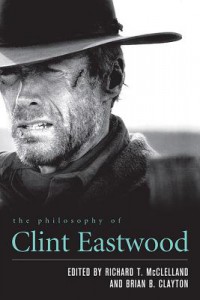
The Philosophy of Clint Eastwood
Edited by Richard T. McClelland and Brian B. Clayton


 (0 vote)
Average rating:
| 0 | rating |  = We can do without = We can do without |
| 0 | rating |  = Good book = Good book |
| 0 | rating |  = Excellent book = Excellent book |
| 0 | rating |  = Unique / a reference = Unique / a reference |
Your rating: -
Book Presentation:
Famous for his masculine swagger and gritty roles, American cultural icon Clint Eastwood has virtually defined the archetype of the tough lawman. Beginning with his first on-screen appearance in the television series Rawhide (1959–1965) and solidified by his portrayal of the "Man with No Name" in Sergio Leone's "Dollars" trilogy (1964–1966), he rocketed to stardom and soon became one of the most recognizable actors in Hollywood. The Philosophy of Clint Eastwood examines the philosophy and psychology behind this versatile and controversial figure, exploring his roles as actor, musician, and director. Led by editors Richard T. McClelland and Brian B. Clayton, the contributors to this timely volume discuss a variety of topics. They explore Eastwood's arresting critique and revision of the traditional western in films such as Unforgiven (1992), as well as his attitudes toward violence and the associated concept of masculinity from the Dirty Harry movies (starting in 1971) to Gran Torino (2008). The essays also chart a shift in Eastwood's thinking about the value of so-called rugged individualism, an element of many of his early films, already questioned in Play Misty for Me (1971) and decisively rejected in Million Dollar Baby (2004). Clint Eastwood has proven to be a dynamic actor, a perceptive and daring director, as well as an intriguing public figure. Examining subjects such as the role of civil morality and community in his work, his use of themes of self-reliance and religious awareness, and his cinematic sensibility, The Philosophy of Clint Eastwood will provide readers with a deeper sense of Eastwood as an artist and illuminate the philosophical conflicts and resolutions that drive his films.
About the authors:
Richard T. McClelland is professor of philosophy at Gonzaga University. Brian B. Clayton is associate professor of philosophy at Gonzaga University and director of the Gonzaga University Faith and Reason Institute.
Press Reviews:
A worthwhile collection of essays. This book will be of interest to scholars of Clint Eastwood's work for its own sake, as well as those interested in using popular films as a vehicle for philosophical inquiry. -Dirk W. Eitzen, Franklin & Marshall College
A well-conceived and well-executed project, The Philosophy of Clint Eastwood illustrates that Eastwood philosophizes in a serious way on important topics through his art of filmmaking. This volume makes a significant contribution to the fields of film studies and philosophy. -Michael P. Foley, Baylor University
See the publisher website: University Press of Kentucky
See the complete filmography of Clint Eastwood on the website: IMDB ...
> On a related topic:

Clint Eastwood (2023)
The Iconic Filmmaker and his Work
by Ian Nathan
Subject: Director > Clint Eastwood
Tough Ain't Enough (2018)
New Perspectives on the Films of Clint Eastwood
Dir. Lester D. Friedman and David Desser
Subject: Director > Clint Eastwood
The Films of Clint Eastwood (2018)
Critical Perspectives
Dir. Matt Wanat and Leonard Engel
Subject: Director > Clint Eastwood
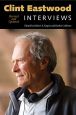
Clint Eastwood (2012)
Interviews
Dir. Robert E. Kapsis and Kathie Coblentz
Subject: Director > Clint Eastwood


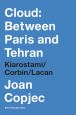
Cloud (2025)
Between Paris and Tehran: Kiarostami/Corbin/Lacan
by Joan Copjec
Subject: Director > Abbas Kiarostami
 Back
Back

