


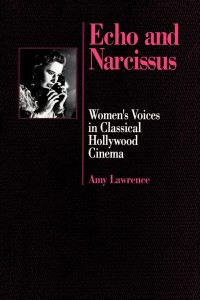
Echo and Narcissus
Women's Voices in Classical Hollywood Cinema
by Amy Lawrence


 (0 vote)
Average rating:
| 0 | rating |  = We can do without = We can do without |
| 0 | rating |  = Good book = Good book |
| 0 | rating |  = Excellent book = Excellent book |
| 0 | rating |  = Unique / a reference = Unique / a reference |
Your rating: -
Book Presentation:
Do women in classical Hollywood cinema ever truly speak for themselves? In Echo and Narcissus, Amy Lawrence examines eight classic films to show how women's speech is repeatedly constructed as a "problem," an affront to male authority. This book expands feminist studies of the representation of women in film, enabling us to see individual films in new ways, and to ask new questions of other films.
Using Sadie Thompson (1928), Blackmail (1929), Rain (1932), The Spiral Staircase, Sorry,Wrong Number, Notorious, Sunset Boulevard (1950) and To Kill a Mockingbird (1962), Lawrence illustrates how women's voices are positioned within narratives that require their submission to patriarchal roles and how their attempts to speak provoke increasingly severe repression. She also shows how women's natural ability to speak is interrupted, made difficult, or conditioned to a suffocating degree by sound technology itself. Telephones, phonographs, voice-overs, and dubbing are foregrounded, called upon to silence women and to restore the primacy of the image.
Unlike the usage of "voice" by feminist and literary critics to discuss broad issues of authorship and point of view, in film studies the physical voice itself is a primary focus. Echo and Narcissus shows how assumptions about the "deficiencies" of women's voices and speech are embedded in sound's history, technology, uses, and marketing. Moreover, the construction of the woman's voice is inserted into the ideologically loaded cinematic and narrative conventions governing the representation of women in Hollywood film.
About the Author:
Amy Lawrence is Assistant Professor of Drama and Film Studies at Dartmouth College.
> From the same author:


> On a related topic:
Like a Natural Woman (2014)
Spectacular Female Performance in Classical Hollywood
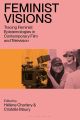
Feminist Visions (2026)
Tracing Feminist Epistemologies in Contemporary Film and Television
Dir. Hélène Charlery and Cristelle Maury
Subject: Sociology

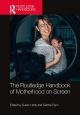
The Routledge Handbook of Motherhood on Screen (2025)
Dir. Susan Liddy and Deirdre Flynn
Subject: Sociology
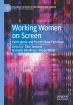
Working Women on Screen (2025)
Paid Labour and Fourth Wave Feminism
Dir. Ellie Tomsett, Nathalie Weidhase and Poppy Wilde
Subject: Sociology
Sacred Sisterhoods (2025)
A Celebration of Black Women's Friendships on Television and in Film
Dir. Imani M. Cheers
Subject: Sociology
 Back
Back

