


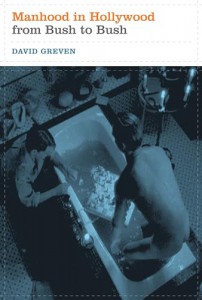
Manhood in Hollywood from Bush to Bush
by David Greven


 (0 vote)
Average rating:
| 0 | rating |  = We can do without = We can do without |
| 0 | rating |  = Good book = Good book |
| 0 | rating |  = Excellent book = Excellent book |
| 0 | rating |  = Unique / a reference = Unique / a reference |
Your rating: -
Book Presentation:
A struggle between narcissistic and masochistic modes of manhood defined Hollywood masculinity in the period between the presidencies of George H. W. Bush and George W. Bush. David Greven's contention is that a profound shift in representation occurred during the early 1990s when Hollywood was transformed by an explosion of films that foregrounded non-normative gendered identity and sexualities. In the years that have followed, popular cinema has either emulated or evaded the representational strategies of this era, especially in terms of gender and sexuality.
One major focus of this study is that, in a great deal of the criticism in both the fields of film theory and queer theory, masochism has been positively cast as a form of male sexuality that resists the structures of normative power, while narcissism has been negatively cast as either a regressive sexuality or the bastion of white male privilege. Greven argues that narcissism is a potentially radical mode of male sexuality that can defy normative codes and categories of gender, whereas masochism, far from being radical, has emerged as the default mode of a traditional normative masculinity. This study combines approaches from a variety of disciplines—psychoanalysis, queer theory, American studies, men's studies, and film theory—as it offers fresh readings of several important films of the past twenty years, including Casualties of War, The Silence of the Lambs, Fight Club, The Passion of the Christ, Auto Focus, and Brokeback Mountain.
> From the same author:


Ryan Murphy's Queer America (2022)
Dir. Brenda R. Weber and David Greven
Subject: Others persons > Ryan Murphy

Queering The Terminator (2017)
Sexuality and Cyborg Cinema
by David Greven
Subject: One Film > The Terminator

Intimate Violence (2017)
Hitchcock, Sex, and Queer Theory
by David Greven
Subject: Director > Alfred Hitchcock

Psycho-Sexual (2013)
Male Desire in Hitchcock, De Palma, Scorsese, and Friedkin
by David Greven
Subject: Sociology

Gender and Sexuality in Star Trek (2009)
Allegories of Desire in the Television Series and Films
by David Greven
Subject: One Film > Star Trek (TV Series)
> On a related topic:
Sexualised Masculinity (2025)
Men's Bodies in 21st Century Media Culture
by John Mercer and Clarissa Smith
Subject: Sociology



Clicas (2024)
Gender, Sexuality, and Struggle in Latina/o/x Gang Literature and Film
by Frank García
Subject: Sociology


Toxic Masculinity (2020)
Mapping the Monstrous in Our Heroes
Dir. Esther de Dauw and Daniel J. Connell
Subject: Sociology

The Thrill Makers (2012)
Celebrity, Masculinity, and Stunt Performance
by Jacob Smith
Subject: Sociology

Defeated Masculinity (2009)
Post-Traumatic Cinema in the Aftermath of War
by Raya Morag
Subject: Sociology

Pimps, Wimps, Studs, Thugs and Gentlemen (2009)
Essays on Media Images of Masculinity
Dir. Elwood Watson
Subject: Sociology
 Back
Back

