


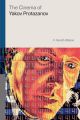
The Cinema of Sergei Parajanov



 (0 vote)
Moyenne des votes :
| 0 | vote |  = On peut s'en passer = On peut s'en passer |
| 0 | vote |  = Bon livre = Bon livre |
| 0 | vote |  = Excellent livre = Excellent livre |
| 0 | vote |  = Unique / une référence = Unique / une référence |
Votre vote : -
Description de l'ouvrage:
“In the temple of cinema, there are images, light, and reality. Sergei Parajanov was the master of that temple.”
—Jean-Luc Godard
Sergei Parajanov (1924–90) flouted the rules of both filmmaking and society in the Soviet Union and paid a heavy personal price. An ethnic Armenian in the multicultural atmosphere of Tbilisi, Georgia, he was one of the most innovative directors of postwar Soviet cinema. Parajanov succeeded in creating a small but marvelous body of work whose style embraces such diverse influences as folk art, medieval miniature painting, early cinema, Russian and European art films, surrealism, and Armenian, Georgian, and Ukrainian cultural motifs.
The Cinema of Sergei Parajanov is the first English-language book on the director’s films and the most comprehensive study of his work. James Steffen provides a detailed overview of Parajanov’s artistic career: his identity as an Armenian in Georgia and its impact on his aesthetics; his early films in Ukraine; his international breakthrough in 1964 with Shadows of Forgotten Ancestors;his challenging 1969 masterpiece, The Color of Pomegranates, which was reedited against his wishes; his unrealized projects in the 1970s; and his eventual return to international prominence in the mid-to-late 1980s with The Legend of the Surami Fortress and Ashik-Kerib. Steffen also provides a rare, behind-the-scenes view of the Soviet film censorship process and tells the dramatic story of Parajanov’s conflicts with the authorities, culminating in his 1973–77 arrest and imprisonment on charges related to homosexuality.
Ultimately, the figure of Parajanov offers a fascinating case study in the complicated dynamics of power, nationality, politics, ethnicity, sexuality, and culture in the republics of the former Soviet Union.
À propos de l'auteur :
James Steffen is film and media studies librarian at Emory University in Atlanta and a historian of Soviet and post-Soviet cinema. For more information, visit www.jamesmsteffen.net.
Voir le site internet de l'éditeur University of Wisconsin Press
Voir la filmographie complète de Sergei Parajanov sur le site IMDB ...
> Sur un thème proche :


An Imaginary Cinema (2024)
Sergei Eisenstein and the Unrealized Film
Sujet : Director > Sergei Eisenstein

Kuleshov on Film (2018)
Writings of Lev Kuleshov
de Lev Kuleshov et Ronald Levaco
Sujet : Director > Lev Kuleshov

 Retour

