


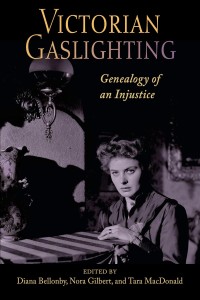
Victorian Gaslighting
Genealogy of an Injustice
Edited by Diana Bellonby, Nora Gilbert and Tara MacDonald


 (0 vote)
Average rating:
| 0 | rating |  = We can do without = We can do without |
| 0 | rating |  = Good book = Good book |
| 0 | rating |  = Excellent book = Excellent book |
| 0 | rating |  = Unique / a reference = Unique / a reference |
Your rating: -
Book Presentation:
Reads gaslighting as a term, concept, and form of abuse fundamentally tied to the literature and culture of the Victorian British Empire.
Victorian Gaslighting is the first literary-cultural history of gaslighting, a term derived from the haunting neo-Victorian play Gas Light (1938), which tells the story of a sadistic husband who manipulates his wife into believing she’s losing her mind. The collection traces the type of emotional abuse we find in the various stage and screen versions of the play back to its nineteenth-century British roots. Gaslighting emerged during an era when the idea of madness was debated, misused, policed, and medicalized like never before―and when the interlocking institutions of patriarchy, slavery, and imperialism sought to convince women, racialized others, and colonized subjects that their own perceptions were not to be trusted. More than anything, as the volume's wide-ranging analyses of both canonical and little-known Victorian texts demonstrate, gaslighting depends on the power to propagate a false narrative. This study clarifies how gaslighting works, then and now, by taking a deep dive into the distinctly Victorian horror story at the heart of this persistent form of injustice.
About the authors:
Diana Bellonby is a Philadelphia-based writer who received her PhD in English from Vanderbilt University. Her work has appeared in Criticism, The Microgenre, Public Books, and other venues. Nora Gilbert is Professor of English at the University of North Texas. She is the author of Better Left Unsaid: Victorian Novels, Hays Code Films, and the Benefits of Censorship and Gone Girls, 1684-1901: Flights of Feminist Resistance in the Eighteenth- and Nineteenth-Century British Novel. Tara MacDonald is Professor of English and women's and gender studies at the University of Lethbridge. She is the author of Narrative, Affect, and Victorian Sensation: Wilful Bodies and The New Man, Masculinity, and Marriage in the Victorian Novel.
Press Reviews:
"A wonderfully innovative, ambitious, impressive collection. Often the term gaslighting is treated loosely, as if it merely means 'lying.' Victorian Gaslighting resists this over-simplification to offer a powerful paradigm for discussing how aspects of material cultural history―from property law to abolition, from debates about authorship to lighting infrastructure―undermine those who are not in positions of power by insinuating that they are incapable of correctly assessing the dynamics that keep them down. This book will absolutely change the conversation around gaslighting." ― Andrea Kaston Tange, author of Architectural Identities: Domesticity, Literature and the Victorian Middle Classes
See the publisher website: State University of New York Press
See Gaslight (1944) on IMDB ...
> From the same authors:
Better Left Unsaid (2015)
Victorian Novels, Hays Code Films, and the Benefits of Censorship
by Nora Gilbert
Subject: Sociology
> On a related topic:
A Star Is Reborn (2026)
The Most Filmed Hollywood Story of Love Found and Lost
Subject: One Film > A Star Is Born
A Star Is Born (2002)
The Making of the 1954 Movie and Its 1983 Restoration
by Ronald Haver
Subject: One Film > A Star Is Born
George Cukor (2026)
Hollywood Master
Dir. Murray Pomerance and R. Barton Palmer
Subject: Director > George Cukor
What Price Hollywood? (2024)
Gender and Sex in the Films of George Cukor
Subject: Director > George Cukor
Conversations with the Great Moviemakers of Hollywood's Golden Age (2006)
At the American Film Institute
Dir. George Stevens Jr.
Subject: Director

 Back
Back

