


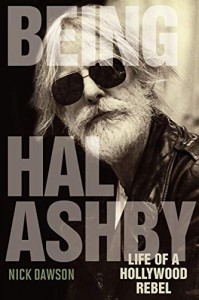
Being Hal Ashby
Life of a Hollywood Rebel
by Nick Dawson


 (0 vote)
Average rating:
| 0 | rating |  = We can do without = We can do without |
| 0 | rating |  = Good book = Good book |
| 0 | rating |  = Excellent book = Excellent book |
| 0 | rating |  = Unique / a reference = Unique / a reference |
Your rating: -
Book Presentation:
Hal Ashby (1929–1988) was always an outsider, and as a director he brought an outsider's perspective to Hollywood cinema. After moving to California from a Mormon household in Utah, he created eccentric films that reflected the uncertain social climate of the 1970s. Whether it is his enduring cult classic Harold and Maude (1971) or the iconic Being There (1979), Ashby's artistry is unmistakable. His skill for blending intense drama with off-kilter comedy attracted A-list actors and elicited powerful performances from Jack Nicholson in The Last Detail (1973), Warren Beatty and Julie Christie in Shampoo (1975), and Jon Voight and Jane Fonda in Coming Home (1979). Yet the man behind these films is still something of a mystery.
In Being Hal Ashby: Life of a Hollywood Rebel, author Nick Dawson for the first time tells the story of a man whose thoughtful and challenging body of work continues to influence modern filmmakers and whose life was as dramatic and unconventional as his films. Ashby began his career as an editor, and it did not take long for his talents to be recognized. He won an Academy Award in 1967 for editing In the Heat of the Night and leveraged his success as an editor to pursue his true passion: directing. Crafting seminal films that steered clear of mainstream conventions yet attracted both popular and critical praise, Ashby became one of the quintessential directors of the 1970s New Hollywood movement.
No matter how much success Ashby achieved, he was never able to escape the ghosts of his troubled childhood. The divorce of his parents, his father's suicide, and his own marriage and divorce—all before the age of nineteen—led to a lifelong struggle with drugs for which he became infamous in Hollywood. And yet, contrary to mythology, it was not Ashby's drug abuse that destroyed his career but a fundamental mismatch between the director and the stifling climate of 1980s studio filmmaking. Although his name may not be recognized by many of today's filmgoers, Hal Ashby is certainly familiar to filmmakers. Despite his untimely death in 1988, his legacy of innovation and individuality continues to influence a generation of independent directors, including Wes Anderson, Sean Penn, and the Coen brothers, who place substance and style above the pursuit of box-office success.
In this groundbreaking and exhaustively researched biography, Nick Dawson draws on firsthand interviews and personal papers from Ashby's estate to offer an intimate look at the tumultuous life of an artist unwilling to conform or compromise.
See the publisher website: University Press of Kentucky
See the complete filmography of Hal Ashby on the website: IMDB ...
> From the same author:


> On a related topic:
The De Palma Decade (2024)
Redefining Cinema with Doubles, Voyeurs, and Psychic Teens
Subject: Director > Brian de Palma

Liberating Hollywood (2018)
Women Directors and the Feminist Reform of 1970s American Cinema
Subject: Countries > United States
Trying to Get Over (2016)
African American Directors After Blaxploitation, 1977-1986
by Keith Corson
Subject: On Films > Guides and dictionaries
Being There and the Evolution of a Screenplay (2022)
3 Draft Scripts with Commentary
by Aaron Hunter
Subject: One Film > Being There
Glorious Birds (2021)
A Celebratory Homage to Harold and Maude
by Heidi Greco
Subject: One Film > Harold and Maude
 Back
Back

