

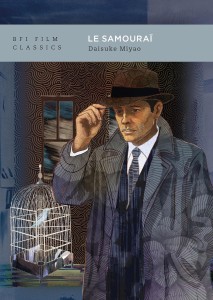
Le Samouraï


 (0 vote)
Moyenne des votes :
| 0 | vote |  = On peut s'en passer = On peut s'en passer |
| 0 | vote |  = Bon livre = Bon livre |
| 0 | vote |  = Excellent livre = Excellent livre |
| 0 | vote |  = Unique / une référence = Unique / une référence |
Votre vote : -
Description de l'ouvrage:
In this compelling study, Daisuke Miyao explores Jean-Pierre Melville's cult 1967 thriller Le Samouraï, a film that unfolds in a coolly stylised Paris where the paths of a contract killer, Jef Costello (Alain Delon), and the police commissaire pursuing him (François Périer) fatally intersect.
Despite its title, Le Samouraï, is not a sword-clashing tale of feudal Japan. Rather, Miyao suggests that the film's philosophical framework draws on both existentialism and the samurai moral philosophy of bushido, or 'the way of the warrior', and considers how these philosophies may help explain Jef Costello's identity crisis and his concluding act of self-annihilation. In a close analysis of Melville's technical and aesthetic decisions, Miyao highlights the film's use of close-ups to convey or mask emotion, the play of light and shadow, and the function of flashbacks and dream sequences in the narrative, as well as the meanings of Costello's pet bullfinch.
Setting Le Samouraï within the shifting landscape of post-war French cinema, Miyao traces its dialogue with Hollywood film noir and Japanese art cinema, particularly Kurosawa's Rashomon (1950), suggesting that both genres informed and influenced Melville's film-making.
Finally, Miyao discusses the film's enduring legacy, from Jim Jarmusch's Ghost Dog: The Way of the Samurai (1999) to Yoko M.'s 2020 novella Jef, a prequel to the film.
À propos de l'auteur :
Daisuke Miyao is the Chair of the Literature Department at UCSD and the author of Japonisme and the Birth of Cinema (2020), Cinema Is a Cat: A Cat Lover's Introduction to Film Studies (2019), The Aesthetics of Shadow: Lighting and Japanese Cinema (2013), and Sessue Hayakawa: Silent Cinema and Transnational Stardom (2007).
Voir le site internet de l'éditeur BFI Publishing
Voir la fiche de le Samouraï (1967) sur le site IMDB ...
> Du même auteur :

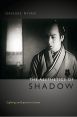
The Aesthetics of Shadow (2013)
Lighting and Japanese Cinema

> Sur un thème proche :
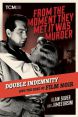
From the Moment They Met It Was Murder (2024)
Double Indemnity and the Rise of Film Noir
de Alain Silver et James Ursini
Sujet : One Film > Double Indemnity
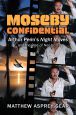
Moseby Confidential (2019)
Arthur Penn's Night Moves and the Rise of Neo-Noir
Sujet : One Film > Night Moves

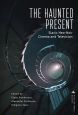
The Haunted Present (2026)
Slavic Neo-Noir Cinema and Television
Dir. Elena Prokhorova, Alexander Prokhorov et Rimgaila Salys
Fernando Di Leo (2026)
Master of Italian Film Noir
de Roberto Curti et Domenico Monetti
Sujet : Director > Fernando Di Leo
 Retour

