


Vitagraph
America's First Great Motion Picture Studio

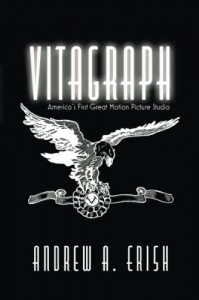

 (0 vote)
Average rating:
| 0 | rating |  = We can do without = We can do without |
| 0 | rating |  = Good book = Good book |
| 0 | rating |  = Excellent book = Excellent book |
| 0 | rating |  = Unique / a reference = Unique / a reference |
Your rating: -
Book Presentation:
Winner of the 2022 Peter C. Rollins Book Award and the 2022 Browne Best Edited Reference/Primary Source Work in Popular and American Culture Award
In Vitagraph: America's First Great Motion Picture Studio, Andrew A. Erish provides a comprehensive examination and reassessment of the company most responsible for defining and popularizing the American movie. This history challenges long-accepted Hollywood mythology that Paramount and Fox invented the feature film, that Universal created the star system, and that these companies, along with MGM and Warner Bros., developed motion pictures into a multimillion-dollar business. In fact, the truth about Vitagraph is far more interesting than the myths that later moguls propagated about themselves.
Established in 1897 by J. Stuart Blackton and Albert E. Smith, Vitagraph was the leading producer of motion pictures for much of the silent era. Vitagraph established America's studio system, a division of labor utilizing specialized craftspeople and artists and developed fundamental aspects of American movies, from framing, lighting, and performance style to emphasizing character-driven comedy and drama in stories that respected and sometimes poked fun at every demographic of Vitagraph's vast audience. For most of its existence America's most influential studio was headquartered in Brooklyn, New York, before relocating to Hollywood.
A historically rigorous and thorough account of the most influential producer of American motion pictures during the silent era, Erish draws on valuable primary material long overlooked by other historians to introduce readers to the fascinating, forgotten pioneers of Vitagraph.
> From the same author:
Col. William N. Selig (2012)
the Man Who Invented Hollywood
> On a related topic:
Reframing Culture (2014)
The Case of the Vitagraph Quality Films
by William Uricchio and Roberta E. Pearson
Subject: Silent Cinema
The Fox Film Corporation, 1915–1935 (2012)
A History and Filmography
The Universal Silents (2009)
A Filmography of the Universal Motion Picture Manufacturing Company, 1912–1929
Balboa Films (2007)
A History and Filmography of the Silent Film Studio
The Man Who Made the Movies (2017)
The Meteoric Rise and Tragic Fall of William Fox
by Vanda Krefft
Subject: Others persons > William Fox
The Astoria Studio and Its Fabulous Films (1983)
A Picture History with 227 Stills and Photographs
Subject: Silent Cinema
Industrial Light & Magic (2026)
50 Years of Innovation
by Ian Failes
Subject: Studio > Industrial Light and Magic
 Back
Back

