

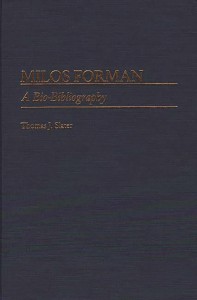
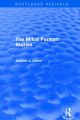
Milos Forman
A Bio-Bibliography


 (0 vote)
Average rating:
| 0 | rating |  = We can do without = We can do without |
| 0 | rating |  = Good book = Good book |
| 0 | rating |  = Excellent book = Excellent book |
| 0 | rating |  = Unique / a reference = Unique / a reference |
Your rating: -
Book Presentation:
This is the most comprehensive study to date of the work of Milos Forman, best known for his Academy Award winning direction of One Flew over the Cuckoo's Nest (1975) and Amadeus (1984). The work begins with a brief biography that emphasizes the relationship for Forman's life to his philosophic and artistic development. The major portion of the work consists of a critical filmography with annotations based on the author's direct study, and an annotated bibliography with an introductory essay.
About the Author:
THOMAS J. SLATER is an Instructor in the Department of English at Northwest Missouri State University.
Press Reviews:
?Slater's guide to the study of Milos Forman reads like the well-organized outline of a dissertation research project that it is. He begins with an overview of Forman's cinematic career, provides a chronology of his life and work through 1986, and then moves to the heart of the book: the filmography and bibliography. These two sections function harmoniously to allow users several approaches to research. The plot summaries and analyses included in the filmography are occasionally redundant, but each analysis also acts as a bibliographic essay. This adds greatly to the value of the bibliography section, which is arranged chronologically and might otherwise be frustrating to use. A brief index expands the usefulness of the volume to the study of themes or individual characters, and to other persons involved in Forman's work: actors, screenwriters, critics. The fact that the bibliography includes only English-language (and primarily US) publications limits its value to advanced scholars, but is well organized, thorough within its limitations, and will prove a valuable resource to anyone interested in the study of Forman or Czech New Wave cinema. Recommended for specialized film collections, graduate students, and advanced undergraduate students.?-Choice
?Thomas Slater chronicles the life and film career of director Milos Forman in this combination filmography-bibliography. He draws on research done for his 1985 dissertation in covering thirteen films Forman has been involved in from 1955 to his 1948 Amadeus. Slater divides his bio-bibliography into an introductory essay on Foman's life and career, a chronology, critical filmography, a bibliography on the director and his films, and a name and subject index. . . . This bibliography contains 613 items from 1955 to a 1987 paper read by the author. Along the way Slater annotates entries from books, scholarly and popular periodicals, notices in reference books and serials, two dissertations, and a large number of film reviews from major U.S. and British newspapers. It concludes with a thorough index. Slater's book is a valuable contribution to film study and East European culture generally. It bodes well for the new Greenwood series begun here.?-ARBA
"Thomas Slater chronicles the life and film career of director Milos Forman in this combination filmography-bibliography. He draws on research done for his 1985 dissertation in covering thirteen films Forman has been involved in from 1955 to his 1948 Amadeus. Slater divides his bio-bibliography into an introductory essay on Foman's life and career, a chronology, critical filmography, a bibliography on the director and his films, and a name and subject index. . . . This bibliography contains 613 items from 1955 to a 1987 paper read by the author. Along the way Slater annotates entries from books, scholarly and popular periodicals, notices in reference books and serials, two dissertations, and a large number of film reviews from major U.S. and British newspapers. It concludes with a thorough index. Slater's book is a valuable contribution to film study and East European culture generally. It bodes well for the new Greenwood series begun here."-ARBA
"Slater's guide to the study of Milos Forman reads like the well-organized outline of a dissertation research project that it is. He begins with an overview of Forman's cinematic career, provides a chronology of his life and work through 1986, and then moves to the heart of the book: the filmography and bibliography. These two sections function harmoniously to allow users several approaches to research. The plot summaries and analyses included in the filmography are occasionally redundant, but each analysis also acts as a bibliographic essay. This adds greatly to the value of the bibliography section, which is arranged chronologically and might otherwise be frustrating to use. A brief index expands the usefulness of the volume to the study of themes or individual characters, and to other persons involved in Forman's work: actors, screenwriters, critics. The fact that the bibliography includes only English-language (and primarily US) publications limits its value to advanced scholars, but is well organized, thorough within its limitations, and will prove a valuable resource to anyone interested in the study of Forman or Czech New Wave cinema. Recommended for specialized film collections, graduate students, and advanced undergraduate students."-Choice
See the publisher website: Greenwood
See the complete filmography of Milos Forman on the website: IMDB ...
> From the same author:
American Silent Film (2002)
Discovering Marginalized Voices
by Gregg Paul Bachman and Thomas J. Slater
Subject: Silent Cinema
> On a related topic:
The People vs. Larry Flynt (1999)
by Scott Alexander and Larry Karaszewski
Subject: One Film > The People vs. Larry Flynt
Man on the Moon (1999)
The Shooting Script
by Scott Alexander and Larry Karaszewski
Subject: One Film > Man on the Moon
 Back
Back

