


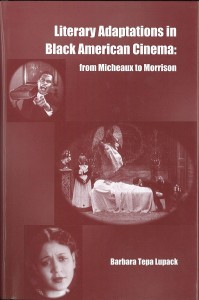
Literary Adaptations in Black American Cinema
From Micheaux to Morrison


 (0 vote)
Average rating:
| 0 | rating |  = We can do without = We can do without |
| 0 | rating |  = Good book = Good book |
| 0 | rating |  = Excellent book = Excellent book |
| 0 | rating |  = Unique / a reference = Unique / a reference |
Your rating: -
Book Presentation:
A comprehensive analysis of the ways in which the black American experience has been depicted in film adaptations of popular literature.
The cinematic representation of blacks, especially in silent and early film, was shaped not only by the sentimental racism of the culture but also by the popular literature which distorted black experience and restricted black characters to minor, stereotyped roles. By contrast, in the works of black writers from Oscar Micheaux to Toni Morrison, the black experience has been more fully, more accurately, and usually more sympathetically realized; and from the early days of film, select filmmakers have looked to that literature as the basis for their productions.
An historical examination of the practice of such adaptation offers telling insights into the portrayal -- andprogress -- of blacks in American movies and culture. It reveals that while blacks, on screen and behind the scenes, were often forced to re-create the demeaning film stereotypes, they learned how to subvert and exploit the artificiality of their caricatures. It also reveals the ways that black filmmakers, beginning with Micheaux, Noble and George Johnson, and their less prominent colleagues like Emmett Scott, worked within the conventions of cinema and society, yet managed to produce films that were, at their best, unconventional and pioneering. It demonstrates that as far back as the 1920s and 1930s, black authors like Paul Laurence Dunbar and Langston Hughes already recognized the need for involvement with film production in order to create pictures that were more representative of black life. It illustrates the fact that, in recent years, as more black voices found their way to the screen, among the strongest were the voices of women. And above all, it confirms that within the rich tradition of black literature of all genres lie many exciting cinematic possibilities for audiences of all colors.
Barbara Tepa Lupack haswritten extensively on the topic of literary adaptations in cinema and is co-author (with Alan Lupack) of King Arthur in America.
Press Reviews:
A fascinating comprehensive journey...thoroughly recommended. -- ― BLACK FILMMAKER
Lupack's book is full of engrossing behind-the-scene details. -- ― VARIETY
Barbara Tepa Lupack's book is a fascinating comprehensive journey through the history of black American cinema. Having read many books on little known films and filmmakers I can fully endorse this book as one of the best I have come across and thoroughly recommend it. In fact, I would defy any self-respecting film historian, film institution or library not to stock it, as they will be failing in their duty to themselves and their patrons. -- ― BLACK FILMMAKER, Dec./Jan. 2003
A well-crafted synthesis of the vast literature on African American cinema...This is a worthwhile volume for all film collections. -- ― CHOICE
> From the same author:
> On a related topic:
Black Women Filmmakers and Black Love on Screen (2020)
Subject: Countries > United States
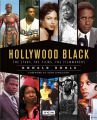
Hollywood Black (2019)
The Stars, the Films, the Filmmakers
by Donald Bogle
Subject: Countries > United States
Celluloid Chains (2019)
Slavery in the Americas through Film
Dir. Rudyard J. Alcocer, Kristen Block and Dawn Duke
Subject: Countries > United States
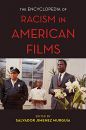
The Encyclopedia of Racism in American Films (2018)
Subject: Countries > United States
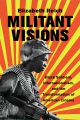
Militant Visions (2016)
Black Soldiers, Internationalism, and the Transformation of American Cinema
Subject: Countries > United States
Toms, Coons, Mulattoes, Mammies, and Bucks (2016)
An Interpretive History of Blacks in American Films
by Donald Bogle
Subject: Countries > United States
Historical Dictionary of African American Cinema (2015)
by S. Torriano Berry and Venise T. Berry
Subject: Countries > United States
Contemporary Black American Cinema (2014)
Race, Gender and Sexuality at the Movies
Dir. Mia Mask
Subject: Countries > United States
 Back
Back

