


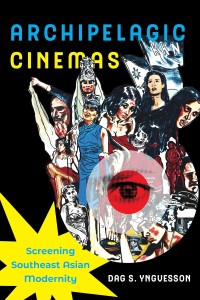
Archipelagic Cinemas
Screening Southeast Asian Modernity


 (0 vote)
Average rating:
| 0 | rating |  = We can do without = We can do without |
| 0 | rating |  = Good book = Good book |
| 0 | rating |  = Excellent book = Excellent book |
| 0 | rating |  = Unique / a reference = Unique / a reference |
Your rating: -
Book Presentation:
A free ebook version of this title is available through Luminos, University of California Press's Open Access publishing program. Visit www.luminosoa.org to learn more.
Archipelagic Cinemas compares trajectories of cinematic and political development across Southeast Asia from the mid-twentieth century to the present, taking the Indonesian island of Java as a key point of departure. Its "archipelagic" approach reflects a region of tanah air (land-water) where strategies of communication are shaped by the inevitability of difference and constant change. Archipelagic Cinemas foregrounds the outgrowth of local motion pictures from established regional modes of expression, such as touring vernacular theaters, known for their improvised assemblies of narratives and aesthetics from diverse places and times. Similarly, Southeast Asian movies have distinguished themselves by rejecting the imposition of a single, sovereign, or necessarily masculine point of reference. Filmmakers respond to political and social shifts with populist shows of unruliness, mockery, and often horror while challenging binary interpretations of good and evil, self and other, and on- and off-screen space. A common cinematic "matrifocal gaze" takes the blurring of women's and men's roles in the region as a tool of engagement with nationalist contests over gender and power. Together, regional cinemas set the stage for a multifarious modern visuality rooted in the unique, intertwined histories of Southeast Asian nations.
About the Author:
Dag S. Yngvesson is a filmmaker and Assistant Professor of Cinema and Cultural Studies in the School of Humanities at the University of Nottingham Malaysia.
> On a related topic:

Southeast Asia on Screen (2020)
From Independence to Financial Crisis (1945-1998)
Dir. Gaik Cheng Khoo, Thomas Barker and Mary Ainslie
Subject: Countries > Southeast Asia
Glimpses of Freedom (2012)
Independent Cinema in Southeast Asia
Dir. May Adadol Ingawanij and Benjamin McKay
Subject: Countries > Southeast Asia

Cuban Cinema After the Cold War (2015)
A Critical Analysis of Selected Films
Subject: Countries > Latin America

The Third Sex (2025)
Beyond a Gender Binary in Thai Culture and Films
Subject: Countries > Southeast Asia

Silver Screens and Golden Dreams (2024)
A Social History of Burmese Cinema
Subject: Countries > Southeast Asia



The Archival Afterlives of Philippine Cinema (2024)
Subject: Countries > Southeast Asia
Thailand, Western Cinema, and Imagery (2024)
Misrepresentation, Exoticisation, and Reclamation
Subject: Countries > Southeast Asia

Independent Filmmaking in South East Asia (2021)
Conversations with Filmmakers on Building and Sustaining a Creative Career
Subject: Countries > Southeast Asia
 Back
Back

