


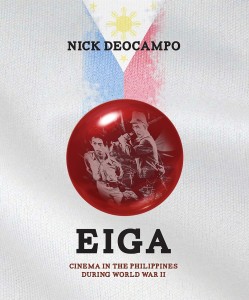
Eiga


 (0 vote)
Average rating:
| 0 | rating |  = We can do without = We can do without |
| 0 | rating |  = Good book = Good book |
| 0 | rating |  = Excellent book = Excellent book |
| 0 | rating |  = Unique / a reference = Unique / a reference |
Your rating: -
Book Presentation:
Nick Deocampo’s continuing film saga investigates on its third volume how World War II affected the growth of cinema in the Philippines (1942-1945). Revealed in the book is a vast wealth of information about Japanese wartime manipulation of motion pictures that would only lead to the inglorious end of the colonial film cycle at war’s conclusion. This valuable construction of the country’s wartime film history uncovers significant intellectual efforts made by Japanese film critics and film artists who formed the Propaganda Corps assigned to the country. They conceived for Filipinos a “national” identity for their cinema, even while this was wrapped in a fascist, colonial, and militaristic context. Seventy years after the end of World War II, Deocampo triumphs over trauma and forgetfulness as he revisits the wartime period and its cinema. He provides a landmark contribution to historical memory as he uncovers one of the bleakest moments in Philippine film history.
> On a related topic:

Hollywood's Unofficial Film Corps (2025)
American Jewish Moviemakers and the War Effort
Subject: Countries > United States

Projecting Britain at War (2014)
The National Character in British World War II Films
Subject: Countries > Great Britain
Regional Cinema in the Philippines (2025)
The Archipelagic Imagination
Subject: Countries > Southeast Asia
The Archival Afterlives of Philippine Cinema (2024)
Subject: Countries > Southeast Asia
Philippine Cinematic Art (2022)
by Andrea L. Peterson, Gaspar A. Vibal, Christopher A. Datol and Nicanor C. Lajom
Subject: Countries > Southeast Asia
Philippine Cinema 1897–2020 (2022)
Dir. Gaspar Vibal, Dennis Villegas and Teddy Co
Subject: Countries > Southeast Asia
City of Screens (2021)
Imagining Audiences in Manila's Alternative Film Culture
Subject: Countries > Southeast Asia
 Back
Back

