

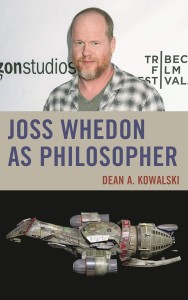
Joss Whedon as Philosopher


 (0 vote)
Moyenne des votes :
| 0 | vote |  = On peut s'en passer = On peut s'en passer |
| 0 | vote |  = Bon livre = Bon livre |
| 0 | vote |  = Excellent livre = Excellent livre |
| 0 | vote |  = Unique / une référence = Unique / une référence |
Votre vote : -
Description de l'ouvrage:
In this book, Dean Kowalski argues that filmmakers can “do” philosophy when creating a fictional narrative film, and utilizes a careful and extensive analysis of Joss Whedon’s fictive creations―Buffy the Vampire Slayer, Angel, Firefly, Dollhouse, and The Cabin in the Woods (among others)―to establish this thesis.
This book appeals to many different readers. For the many admirers of Whedon’s fictive creations, it offers one of the most comprehensive analyses of his corpus. It reprises many examples and dialogue passages from the far corners of the so-called “Whedonverse.” You’ll get a chance to re-experience your favorite dramatic moments, and think about them in novel ways. For popular culture scholars, it offers illustrations of various philosophical theories, explains how those theories pertain to relevant data points in Whedon’s oeuvre, and assesses whether, or to what extent, they have real-world application. For philosophers of film, it explicates crucial issues germane to the film-as-philosophy debate, but also expands them to television―all in the attempt to demonstrate why it is that Whedon ought to be included among those rare filmmakers who engage the philosophical process via their artistry.
À propos de l'auteur :
Dean A. Kowalski is professor of philosophy at the University of Wisconsin-Waukesha.
Revue de Presse:
"Dean Kowalski’s Joss Whedon as Philosopher confirms what we have long suspected, that there is a great deal of philosophical gold to be mined from the Whedonverse. Kowalski expertly guides the reader through the many philosophical insights and provocations that can be found in Whedon’s works, from Buffy, Angel and Firefly, to the Avengers films, Cabin in the Woods and Dollhouse. He shows how Whedon’s creations have much to tell us about authenticity and the good life, rights and personhood, ethics and religion, free will and determinism, and more besides. In the second part, the book offers some meditations of its own on the very idea of film (and television) as philosophy – all the better to confirm that Whedon can readily be numbered among those who, in the act of filmmaking, actually do philosophy." ―Chris Falzon, University of Newcastle
Voir le site internet de l'éditeur Lexington Books
Voir la filmographie complète de Joss Whedon sur le site IMDB ...
> Sur un thème proche :
The Philosophy of Joss Whedon (2011)
Dir. Dean A. Kowalski et S. Evan Kreider
Sujet : Director > Joss Whedon
Joss Whedon, Anarchist? (2019)
A Unified Theory of the Films and Television Series
de James Rocha et Mona Rocha
Sujet : Director > Joss Whedon
Joss Whedon FAQ (2019)
All That's Left to Know About Buffy, Angel, Firefly, Dr. Horrible, the Avengers, and More
Sujet : Director > Joss Whedon

Joss Whedon Versus the Corporation (2017)
Big Business Critiqued in the Films and Television Programs
Sujet : Director > Joss Whedon
At Home in the Whedonverse (2017)
Essays on Domestic Place, Space and Life
Dir. Juliette C. Kitchens
Sujet : Director > Joss Whedon
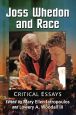
Joss Whedon and Race (2016)
Critical Essays
Dir. Mary Ellen Iatropoulos et Lowery A. Woodall III
Sujet : Director > Joss Whedon
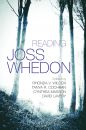
Reading Joss Whedon (2014)
de Rhonda V. Wilcox, Tanya Cochran, Cynthea Masson et David Lavery
Sujet : Director > Joss Whedon
 Retour

