


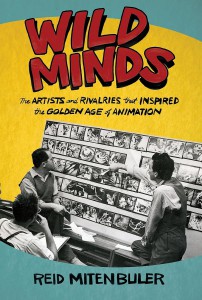
Wild Minds
The Artists and Rivalries That Inspired the Golden Age of Animation


 (0 vote)
Average rating:
| 0 | rating |  = We can do without = We can do without |
| 0 | rating |  = Good book = Good book |
| 0 | rating |  = Excellent book = Excellent book |
| 0 | rating |  = Unique / a reference = Unique / a reference |
Your rating: -
Book Presentation:
The vivid and untold story of the Golden Age of classic animation and the often larger-than-life artists who created some of the most iconic cartoon characters of the twentieth century
In 1911, famed cartoonist Winsor McCay debuted one of the first animated cartoons, based on his sophisticated newspaper strip "Little Nemo in Slumberland," itself inspired by Freud's recent research on dreams. McCay is largely forgotten today, but he unleashed an art form, and the creative energy of artists from Otto Messmer and Max Fleischer to Walt Disney and Warner Bros.' Chuck Jones. Their origin stories, rivalries, and sheer genius, as Reid Mitenbuler skillfully relates, were as colorful and subversive as their creations—from Felix the Cat to Bugs Bunny to feature films such as Fantasia—which became an integral part and reflection of American culture over the next five decades.
Pre-television, animated cartoons were aimed squarely at adults; comic preludes to movies, they were often "little hand grenades of social and political satire." Early Betty Boop cartoons included nudity; Popeye stories contained sly references to the injustices of unchecked capitalism. "During its first half-century," Mitenbuler writes, "animation was an important part of the culture wars about free speech, censorship, the appropriate boundaries of humor, and the influence of art and media on society." During WWII it also played a significant role in propaganda. The Golden Age of animation ended with the advent of television, when cartoons were sanitized to appeal to children and help advertisers sell sugary breakfast cereals.
Wild Minds is an ode to our colorful past and to the creative energy that later inspired The Simpsons, South Park, and BoJack Horseman.
See the publisher website: Grove Press
> On a related topic:
Beyond Bagpuss (2022)
A History of Smallfilms Animation Studio
Funny Pictures (2011)
Animation and Comedy in Studio-Era Hollywood
Dir. Daniel Goldmark and Charles Keil
The Animation Atlas (2025)
The Ghibliotheque Guide to the World of Animated Film
by Jake Cunningham and Michael Leader
A Van Beuren Production (2020)
A History of the 619 Cartoons, 875 Live Action Shorts, Four Feature Films and One Serial of Amedee Van Beuren
by Hal Erickson
Shadow of a Mouse (2012)
Performance, Belief, and World-Making in Animation
That's All Folks? (2011)
Ecocritical Readings of American Animated Features
by Robin L. Murray and Joseph K. Heumann
Film Cartoons (2005)
A Guide to 20th Century American Animated Features and Shorts
 Back
Back

