


Meshes of the Afternoon


 (0 vote)
Moyenne des votes :
| 0 | vote |  = On peut s'en passer = On peut s'en passer |
| 0 | vote |  = Bon livre = Bon livre |
| 0 | vote |  = Excellent livre = Excellent livre |
| 0 | vote |  = Unique / une référence = Unique / une référence |
Votre vote : -
Description de l'ouvrage:
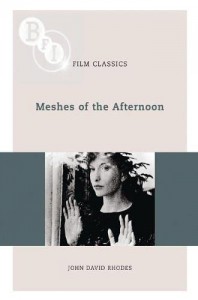
Meshes of the Afternoon (1943) is the most important film in the history of American avant-garde cinema and one of the most significant and influential films in the whole of film history. It was made by Maya Deren and her then husband Alexander Hammid in their bungalow above Sunset Boulevard in Los Angeles for a mere $274.90. The artistic collaboration between Deren and Hammid which was by all accounts harmonious finds its distorted and unhappy reflection in the vision of the tormented female protagonist in Meshes of the Afternoon. The film's focus through a series of intricate and interlocking dream sequences on female experience and the domestic sphere link it to the Hollywood melodramas of the period, while its unsettling atmosphere of dread, death and doubles makes it a counter-cinematic cousin to film noir. The film has made its influence felt not only on the entire subsequent history of experimental film and video production, but also on the work of Hollywood auteurs. It is a touchstone of women's film-making, of modernist cinema and of modern art. John David Rhodes traces the film's history back into the lives of Maya Deren and Alexander Hammid, but in particular that of Deren. He places special significance on the film as a culmination of Deren's abiding interest in modernism and her intense engagement in socialist politics. Rhodes argues that while the film remains a powerful point of reference for the feminist film-makers and experimentalists who have claimed it as their birthright, it also offers itself as an example of political art in the broadest terms. In Rhodes's original study, Meshes of the Afternoon emerges as a film that is not only artistically ingenious, but also rich in historical significance and political potential.
Voir le site internet de l'éditeur BFI Publishing
Voir la fiche de Meshes of the Afternoon (1943) sur le site IMDB ...
Edition plus récente
> Du même auteur :


Taking Place (2011)
Location and the Moving Image
Dir. John David Rhodes et Elena Gorfinkel
Sujet : Theory

> Sur un thème proche :
The Melancholy Lens (2021)
Loss and Mourning in American Avant-Garde Cinema
de Tony Pipolo
Sujet : Genre > Experimental


Artaud-Dulac (2009)
La Coquille et le Clergyman, The Seashell and the Clergyman
de Odette Virmaux et Alain Virmaux
(en français et anglais)
Sujet : One Film > The Seashell and the Clergyman
Marcel Broodthaers and Film (2024)
A Second of Eternity
Dir. Steven Jacobs et Raf Wollaert
Sujet : Genre > Experimental

Seeing Symphonically (2022)
Avant-Garde Film, Urban Planning, and the Utopian Image of New York
de Erica Stein
Sujet : Genre > Experimental

Jonas Mekas (2022)
The Camera Was Always Running
Dir. Inesa Brasiske, Lukas Brasiskis et Kelly Taxter
Sujet : Director > Jonas Mekas
 Retour

