


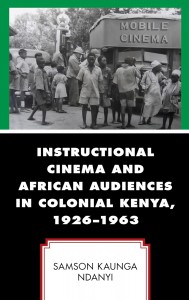
Instructional Cinema and African Audiences in Colonial Kenya, 1926–1963


 (0 vote)
Average rating:
| 0 | rating |  = We can do without = We can do without |
| 0 | rating |  = Good book = Good book |
| 0 | rating |  = Excellent book = Excellent book |
| 0 | rating |  = Unique / a reference = Unique / a reference |
Your rating: -
Book Presentation:
In Instructional Cinema and African Audiences in Colonial Kenya, 1926–1963, the author argues against the colonial logic instigating that films made for African audiences in Kenya influenced them to embrace certain elements of western civilization but Africans had nothing to offer in return. The author frames this logic as unidirectional approach purporting that Africans were passive recipients of colonial programs. Contrary to this understanding, the author insists that African viewers were active participants in the discourse of cinema in Kenya. Employing unorthodox means to protest mediocre films devoid of basic elements of film production, African spectators forced the colonial government to reconsider the way it produced films. The author frames the reconsideration as bidirectional approach. Instructional cinema first emerged as a tool to “educate” and “modernize” Africans, but it transformed into a contestable space of cultural and political power, a space that both sides appropriated to negotiate power and actualize their abstract ideas.
About the Author:
Samson Kaunga Ndanyi is assistant professor of African history and Africana studies at Rhodes College, Memphis, Tennessee.
Press Reviews:
In this scholarly text, Ndanyi discusses the aims, strategies, expectations, content, and ulterior motives of colonial instructional cinema in Kenya, arguing that the racially stratified cinematic space aimed to consolidate colonial power and white hegemonic control over Black bodies. Ndanyi's versatility as a film producer and history professor shines throughout this illuminating work on African colonial cinema…. The marketing of products from companies like Unilever and Cadbury midway through the shows and the inclusion of propaganda about the British royal family and instructions on agriculture all exposed the colonizers' preoccupations and were effectively confronted by anti-colonial nationalists and movements such as Harry Thuku, Dedan Kimathi, and the Mau Mau rebellion (1952–60). Recommended. General readers through faculty
― Choice Reviews
> On a related topic:

Documentary Objectives (2026)
Filming Africa from Colonialism to Independence
Francophone African Women Documentary Filmmakers (2023)
Beyond Representation
Dir. Suzanne Crosta, Sada Niang and Alexie Tcheuyap

Uncovering Memory (2023)
Filming in South Africa, Germany, Poland and Bosnia/Herzegovina
by Tanja Sakota
Subject: Genre > Documentary
Across the World with the Johnsons (2016)
Visual Culture and American Empire in the Twentieth Century
by Prue Ahrens, Lamont Lindstrom and Fiona Paisley
Subject: Genre > Documentary
The Adventure of the Real (2010)
Jean Rouch and the Craft of Ethnographic Cinema
by Paul Henley
Subject: Director > Jean Rouch
 Back
Back