

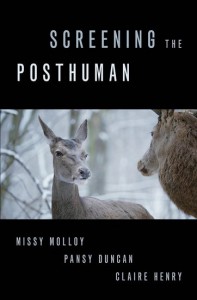
Screening the Posthuman
(livre en anglais)
de Missy Molloy, Pansy Duncan et Claire Henry


 (0 vote)
Moyenne des votes :
| 0 | vote |  = On peut s'en passer = On peut s'en passer |
| 0 | vote |  = Bon livre = Bon livre |
| 0 | vote |  = Excellent livre = Excellent livre |
| 0 | vote |  = Unique / une référence = Unique / une référence |
Votre vote : -
Description de l'ouvrage :
• Explores the relationship between posthuman theory and contemporary on-screen representation of the posthuman
• Examines a striking cross section of global cinema that grapples with the transformations currently reshaping the human experience
• Extends the conversation about posthuman cinema by moving beyond science fiction and fantasy as its appropriate generic domain
From AI to climate change, recent technological, ecological, and cultural transformations have unsettled established assumptions about the relationship between the human and the more-than-human world. Screening the Posthuman addresses a heterogenous body of twenty-first century films that turn to the figure of the "posthuman" as a means of exploring this development.
Through close analyses of films as diverse as Kûki ningyô [Air Doll] (dir. Hirokazu Koreeda 2009), Testrol és lélekrol [On Body and Soul] (dir. Ildiko Enyedi 2017) and Nomadland (dir. Chloé Zhao 2020), this wide-ranging volume shows that, while often identified as the remit of science fiction, the posthuman on screen crosses filmic genres, national contexts, and industrial settings. In the process, posthuman cinema emphasizes humanity's entanglement in broader biological, technological, and social worlds and exposes new models of subjectivity, community, and desire.
In advancing these arguments, Screening the Posthuman draws on scholarship associated with critical posthumanist theory—an ongoing project unified by a decentering of the "human". As the first systematic, full-length application of this body of scholarship to cinema, Screening the Posthuman advocates for a rigorous posthumanist critique that avoids both humanist nostalgia and transhumanist fantasy in its attention to the excitements and anxieties of posthuman experience.
À propos des auteurs :
Missy Molloy, Senior Lecturer in Film, Victoria University of Wellington, Pansy Duncan, Senior Lecturer in Media Studies, Massey University, and Claire Henry, Lecturer, Flinders University Missy Molloy is Senior Lecturer in Film at Victoria University of Wellington in Aotearoa New Zealand. Pansy Duncan is Senior Lecturer in Media Studies at Massey University in Auckland, Aotearoa New Zealand. Claire Henry is Lecturer in Screen at Flinders University in Adelaide, Australia.
Revue de Presse :
"In summary, Pansy Duncan, Claire Henry, and Missy Molloy have fashioned an impressive critical exercise on posthuman theory that will surely serve as a crucial text and foundational source of scholarship in the emerging, evolving discourse in our collective engagement with the posthuman, in an ever decentralized contemporary understanding of what it means to be human." - M. Sellers Johson, Afterimage: The Journal of Media Arts and Cultural Criticism
"The book thus serves as a foundational text for scholars interested in the posthuman in cinema, as it not only functions as a useful introduction to critical posthumanism and its cinematic manifestations, but also invites readers to think theoretically beyond the corpus of works analysed here." - Karim Townsend, Alphaville
"The reader comes away with the sense that in its depiction of contemporary life, cinema is cooperating with posthuman studies to decenter the experience of the human, as conceived by liberal humanism." - Choice
"The volume is a welcome addition to both film studies and posthuman studies because its content points to the layering of figures such as zombies and revenants within the tropes and rhetorics of popular culture." - Pramod K Nayar, The Year's Work in Critical and Cultural Theory
> Des mêmes auteurs :

The Films of Susanne Bier (2018)
Dir. Missy Molloy, Mimi Nielsen et Meryl Shriver-Rice
Sujet : Réalisatrice > Susanne Bier
> Sur un thème proche :

Thrills Untapped 2 (2025)
More Discoveries for Science Fiction, Horror and Fantasy Movie Fans, 1928–1936
Sujet : Genre > Fantastique
Science Fiction, Fantasy and Horror Film Sequels, Series and Remakes (2018)
An Illustrated Filmography, Volume II (1996–2016)
de Kim R. Holston et Tom Winchester
Sujet : Genre > Fantastique
Altermundos (2017)
Latin@ Speculative Literature, Film, and Popular Culture
Dir. Cathryn Josefina Merla-Watson et B. V. Olguin
Sujet : Genre > Fantastique
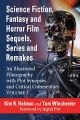
Science Fiction, Fantasy and Horror Film Sequels, Series and Remakes (2016)
An Illustrated Filmography, With Plot Synopses and Critical Commentary
de Kim R. Holston et Tom Winchester
Sujet : Genre > Fantastique
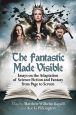
The Fantastic Made Visible (2015)
Essays on the Adaptation of Science Fiction and Fantasy from Page to Screen
Dir. Matthew Wilhelm Kapell et Ace G. Pilkington
Sujet : Genre > Fantastique
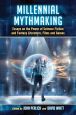
Millennial Mythmaking (2010)
Essays on the Power of Science Fiction and Fantasy Literature, Films and Games
Dir. John Perlich et David Whitt
Sujet : Genre > Fantastique
Robot Ghosts and Wired Dreams (2007)
Japanese Science Fiction from Origins to Anime
Dir. Christopher Bolton, Istvan Csicsery-Ronay Jr. et Takayuki Tatsumi
Sujet : Genre > Fantastique
Utopia and Reality (2020)
Documentary, Activism and Imagined Worlds
Dir. Simon Spiegel, Andrea Reiter et Marcy Goldberg
Sujet : Genre > Science Fiction
 Retour


