

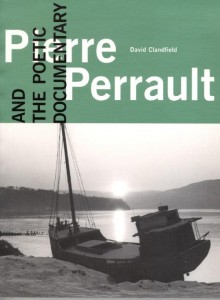
Pierre Perrault and the poetic documentary
(livre en anglais)
Sous la direction de David. Clandfield


 (0 vote)
Moyenne des votes :
| 0 | vote |  = On peut s'en passer = On peut s'en passer |
| 0 | vote |  = Bon livre = Bon livre |
| 0 | vote |  = Excellent livre = Excellent livre |
| 0 | vote |  = Unique / une référence = Unique / une référence |
Votre vote : -
Description de l'ouvrage :
One of the great exponents of the direct cinema style, Quebecois poet, essayist, and film-maker Pierre Perrault (1927-1999) began his documentary career in radio before joining the more traditional René Bonnière filming life in the lower St. Lawrence. In the 1960s he joined the National Film Board of Canada to shoot films in the new direct style, taking a small two-man crew into communities to reveal their beliefs and allegiances as they coped with social change. His legendary trilogy on the Ile-aux-Coudres opened with his most famous work, Pour la suite du monde (1963). Ostensibly a look at the local people’s effort to revive a traditional beluga hunt, it is actually the beginning of a lifelong inquiry into the relationship between community and national identity. This relationship emerges most clearly in the highly poetic Un pays sans bon sens! (1970), which brought Perrault into conflict with the NFB. The film was sidelined for many years.
After a trip outside Quebec to Moncton to document francophone student unrest, Perrault made a second trilogy, this one in northwestern Quebec, showing the collapse of traditional farming communities relocated to the Abitibi during the Great Depression. Further explorations took Perrault to the northern interiors of Quebec, the hunting woods of Maniwaki, and to the tall ships retracing Jacques Cartier’s voyages of discovery. The triology culminated in the desolate arctic landscapes of the mysterious muskox, and two of his most haunting creations.
The first major publication on Perrault in English, Pierre Perrault and the Poetic Documentary discusses not only the world that Perrault’s cinema revealed but a revolution in film-making from a great poet.
Co-written and edited by David Clandfield, Principal of New College in the University of Toronto, Pierre Perrault and the Poetic Documentary also features contributions from scholar Jerry White, as well as translations of some of Perrault’s writings on film.
Published by the Toronto International Film Festival. Distributed in Canada by Wilfrid Laurier University Press. Distributed outside Canada by Indiana University Press.
Voir la filmographie complète de Pierre Perrault sur le site IMDB ...
> Sur un thème proche :
Image and Identity (2006)
Reflections on Canadian Film and Culture
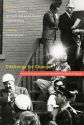
Challenge for Change (2010)
Activist Documentary at the National Film Board of Canada
de Thomas Waugh, Michael Brendan Baker, Ezra Winton et Michael Brendan Baker
Sujet : Genre > Documentaire
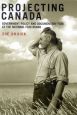
Projecting Canada (2007)
Government Policy and Documentary Film at the National Film Board
de Zoe Druick
Sujet : Genre > Documentaire
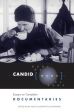
Candid Eyes (2003)
Essays on Canadian Documentaries
Dir. Jim Leach et Jeannette Sloniowski
Sujet : Genre > Documentaire
Voyages of Discovery (2023)
The Cinema of Frederick Wiseman, revised and expanded edition
Sujet : Réalisateur > Frederick Wiseman
Five Films by Frederick Wiseman (2006)
Titicut Follies, High School, Welfare, High School II, Public Housing
Dir. Barry Keith Grant
Sujet : Réalisateur > Frederick Wiseman
Reality Fictions (2002)
The Films of Frederick Wiseman
de Thomas W. Benson et Carolyn Anderson
Sujet : Réalisateur > Frederick Wiseman
 Retour