


Death and the Moving Image
Ideology, Iconography and I (livre en anglais)

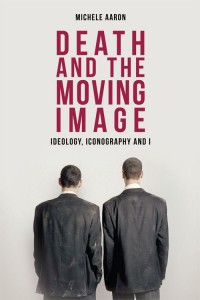

 (0 vote)
Moyenne des votes :
| 0 | vote |  = On peut s'en passer = On peut s'en passer |
| 0 | vote |  = Bon livre = Bon livre |
| 0 | vote |  = Excellent livre = Excellent livre |
| 0 | vote |  = Unique / une référence = Unique / une référence |
Votre vote : -
Description de l'ouvrage :
Winner of the 2015 Kraszna-Krausz Best Moving Image Book AwardExamines the representation of death and dying in mainstream cinema
Death and the Moving Image reveals the ambivalent place of death in twentieth and twenty-first century culture: the ongoing split between its over- and under-statement, between its cold, bodily, realities and its fantastical, transcendental and, most importantly, strategic depictions. Our screens are steeped in death’s dramatics: in spectacles of glorious sacrifice or bloody retribution, in the ecstasy of agony, but always in the promise of redemption. This book is about the staging of these dramatics in mainstream Western film and the discrepancies that fuel them and are, by return, fuelled by them. Exploring the impact of gender, race, nation or narration upon them, this groundbreaking study isolates how mainstream cinema works to bestow value upon certain lives, and specific socio-cultural identities, in a hierarchical and partisan way.
Key Features
• Examines the formal, psychological and political exchange between cinema and death
• Accessible 'before, during, after' structure: of death's presence as narrative promise, physical event and spectatorial reaction.
• Considers how filmmaking practice or visual medium affect the representation of death and its cultural significance
À propos de l'auteur :
Michele Aaron is Senior Lecturer in American and Canadian Studies at the University of Birmingham.
Revue de Presse :
Through a series of sophisticated and highly nuanced readings of a wide range of films, Michele Aaron exposes the mortal economies on which cinema depends. This important book will cause readers to think again about the ethical and political stakes of the filmic treatment of death in mainstream cinema and beyond.'– Sarah Cooper, King’s College London
Through a series of sophisticated and highly nuanced readings of a wide range of films, Michele Aaron exposes the mortal economies on which cinema depends. This important book will cause readers to think again about the ethical and political stakes of the filmic treatment of death in mainstream cinema and beyond.– Sarah Cooper, King’s College London
This compelling and exhaustive study will be a must read for scholars working at the intersection of visual culture and studies of death. Michele Aaron moves through several genres of film and spans the production of films from the 1940s into the 21st century. Specifically, she argues that there is a pervasive aesthetic of self-risk in cinema, a death-drive that secures our several understandings of how contemporary culture masks its own political ends. Moving beyond the psychoanalytic, Aaron ultimately and convincingly demonstrates that it is the ethical in cinema that continues to be denied its proper place, even in the midst of its centrality in the genre. This is bold and welcomed new work.'– Sharon P. Holland, Duke University
This compelling and exhaustive study will be a must read for scholars working at the intersection of visual culture and studies of death. Michele Aaron moves through several genres of film and spans the production of films from the 1940s into the 21st century. Specifically, she argues that there is a pervasive aesthetic of self-risk in cinema, a death-drive that secures our several understandings of how contemporary culture masks its own political ends. Moving beyond the psychoanalytic, Aaron ultimately and convincingly demonstrates that it is the ethical in cinema that continues to be denied its proper place, even in the midst of its centrality in the genre. This is bold and welcomed new work.– Sharon P. Holland, Duke University
Voir le site internet de l'éditeur Edinburgh University Press
> Du même auteur :
> Sur un thème proche :
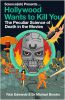
Hollywood Wants to Kill You (2020)
The Peculiar Science of Death in the Movies
de Rick Edwards et Michael Brooks
Sujet : Sociologie
Haunting the Left Bank (2022)
Mortality and Intersubjectivity in Varda, Resnais and Marker
Sujet : Théorie

Afterlives (2016)
Allegories of Film and Mortality in Early Weimar Germany
de Steve Choe
Sujet : Cinéma muet
 Retour


