


Cinemachismo
Masculinities And Sexuality in Mexican Film (livre en anglais)

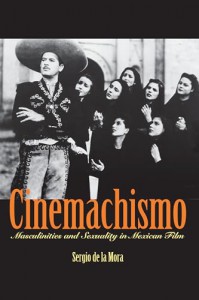

 (0 vote)
Moyenne des votes :
| 0 | vote |  = On peut s'en passer = On peut s'en passer |
| 0 | vote |  = Bon livre = Bon livre |
| 0 | vote |  = Excellent livre = Excellent livre |
| 0 | vote |  = Unique / une référence = Unique / une référence |
Votre vote : -
Description de l'ouvrage :
After the modern Mexican state came into being following the Revolution of 1910, hyper-masculine machismo came to be a defining characteristic of "mexicanidad," or Mexican national identity. Virile men (pelados and charros), virtuous prostitutes as mother figures, and minstrel-like gay men were held out as desired and/or abject models not only in governmental rhetoric and propaganda, but also in literature and popular culture, particularly in the cinema. Indeed, cinema provided an especially effective staging ground for the construction of a gendered and sexualized national identity.
In this book, Sergio de la Mora offers the first extended analysis of how Mexican cinema has represented masculinities and sexualities and their relationship to national identity from 1950 to 2004. He focuses on three traditional genres (the revolutionary melodrama, the cabaretera [dancehall] prostitution melodrama, and the musical comedy "buddy movie") and one subgenre (the fichera brothel-cabaret comedy) of classic and contemporary cinema. By concentrating on the changing conventions of these genres, de la Mora reveals how Mexican films have both supported and subverted traditional heterosexual norms of Mexican national identity. In particular, his analyses of Mexican cinematic icons Pedro Infante and Gael García Bernal and of Arturo Ripstein's cult film El lugar sin límites illuminate cinema's role in fostering distinct figurations of masculinity, queer spectatorship, and gay male representations. De la Mora completes this exciting interdisciplinary study with an in-depth look at how the Mexican state brought about structural changes in the film industry between 1989 and 1994 through the work of the Mexican Film Institute (IMCINE), paving the way for a renaissance in the national cinema.
Voir le site internet de l'éditeur University of Texas Press
> Sur un thème proche :

Mexico Unmanned (2022)
The Cultural Politics of Masculinity in Mexican Cinema


Border Witness (2023)
Reimagining the US-Mexico Borderlands through Film
de Michael Dear
Sujet : Sociologie

Making Cinelandia (2014)
American Films and Mexican Film Culture before the Golden Age
Sujet : Cinéma muet



Spectacle Every Day / Espectáculo a diario (2023)
Essays on classical Mexican cinema 1940-1969
Dir. Díaz de la Vega Alonso et Jorge Javier Negrete Camacho
(en anglais et espagnol)

Woman-Centered Brazilian Cinema (2023)
Filmmakers and Protagonists of the Twenty-First Century
Dir. Jack A. Draper III et Cacilda M. Rêgo

The Lost Cinema of Mexico (2022)
From Lucha Libre to Cine Familiar and Other Churros
Dir. Olivia Cosentino et Brian Price

The White Indians of Mexican Cinema (2022)
Racial Masquerade throughout the Golden Age
 Retour


