


Born To Lose
The Misfits Who Made Dog Day Afternoon (livre en anglais)

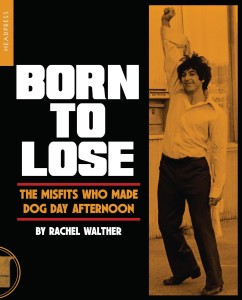

 (0 vote)
Moyenne des votes :
| 0 | vote |  = On peut s'en passer = On peut s'en passer |
| 0 | vote |  = Bon livre = Bon livre |
| 0 | vote |  = Excellent livre = Excellent livre |
| 0 | vote |  = Unique / une référence = Unique / une référence |
Votre vote : -
Description de l'ouvrage :
August 22, 1972: Two men attempt to rob a bank in Brooklyn. They fail miserably: the money they’d hoped for isn’t there, the cops get tipped off immediately, and within 30 minutes they’re in a hostage situation with the FBI. Things really get crazy when reporters learn that one of the robbers is gay and married to a trans woman. The crowd of journalists and onlookers grows into the hundreds, desperate for a glimpse of this charismatic live-wire who’s robbing the bank not for greed or thrills, but to fund his partner’s sexual reassignment surgery.
Sound familiar? This is the plot of Dog Day Afternoon, the 1975 film directed by Sidney Lumet and starring Al Pacino, John Cazale, and Chris Sarandon. It remains a high-water mark of New Hollywood, where the best acting talent of the day came together on a film that was truly exceptional. But equally exceptional was the fact that the film was based on a true-life incident.
Drawing on extensive archival research, film historian Rachel Walther delves into the film’s backstory, tracing how an unbelievable true crime tale of love, bank robbery, and LGBTQI+ activism became a box-office smash and catapulted a group of Brooklyn outsiders into the media spotlight. Name-checked on TV shows from The Simpsons to Drunk History, and now a Broadway play, Dog Day Afternoon’s legacy continues to inspire filmmakers, writers, and actors. Walther’s deep dive interrogates the film’s place in the 1970s zeitgeist, set against a background of antiwar activism and the fight for gay and trans rights, and in doing so shows its continuing relevance today.
À propos de l'auteur :
Rachel Walther is a regular contributor to NOIR CITY and the film columnist for Hamam, an international arts journal. Her work has been published by Vogue Italia, NPR, Amoeba Music, and the San Francisco Weekly. She is based in Oakland, California.
Revue de Presse :
"If, like me, you’re fascinated by how true crime stories are adapted for the screen, Rachel Walther’s deep dive into the history of Dog Day Afternoon―both the real event and its cinematic recreation―is even wilder and more engrossing than the film itself. An instant classic. Savor it!"
―Eddie Muller
Cinema historian, host of TCM’s Noir Alley
"The stranger-than-fiction story behind Dog Day Afternoon finds its ideal teller in Rachel Walther, whose page-turning account does full justice to this hilarious, bizarre, tragic, and timely American tale. Deeply researched and told with all the flavor and gusto it deserves, Born to Lose has much to say about the entanglement of reality, celebrity, and the movies."
―Imogen Sara Smith
Film critic and historian, the Criterion Channel and Film Comment
Voir le site internet de l'éditeur Headpress
Voir la fiche de Un après-midi de chien (1975) sur le site IMDB ...
> Sur un thème proche :
Film Scripts Two (2013)
High Noon, Twelve Angry Men, The Defiant Ones
Dir. George P. Garrett Jr., O. B. Hardison et Jane R. Gelfman
Sujet : Un Film > Le train sifflera 3 fois, 12 Hommes en colère, The Defiant Ones
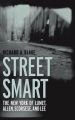
Street Smart (2005)
The New York of Lumet, Allen, Scorsese, and Lee
Sujet : Les Films > Sélections de films
 Retour


