

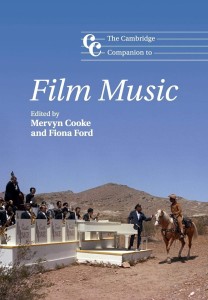
The Cambridge Companion to Film Music
(livre en anglais)
Sous la direction de Mervyn Cooke et Fiona Ford


 (0 vote)
Moyenne des votes :
| 0 | vote |  = On peut s'en passer = On peut s'en passer |
| 0 | vote |  = Bon livre = Bon livre |
| 0 | vote |  = Excellent livre = Excellent livre |
| 0 | vote |  = Unique / une référence = Unique / une référence |
Votre vote : -
Description de l'ouvrage :
This wide-ranging and thought-provoking collection of specially-commissioned essays provides a uniquely comprehensive overview of the many and various ways in which music functions in film soundtracks. Citing examples from a variety of historical periods, genres and film industries - including those of the USA, UK, France, Italy, India and Japan - the book's contributors are all leading scholars and practitioners in the field. They engage, sometimes provocatively, with numerous stimulating aspects of the history, theory and practice of film music in a series of lively discussions which will appeal as much to newcomers to this fascinating subject as to seasoned film music aficionados. Innovative research and fresh interpretative perspectives are offered alongside practice-based accounts of the film composer's distinctive art, with examples cited from genres as contrasting as animation, the screen musical, film noir, Hollywood melodrama, the pop music and jazz film, documentary, period drama, horror, science fiction and the Western.
À propos des auteurs :
Professor Mervyn Cooke teaches film music, jazz, twentieth-century music and composition at the University of Nottingham. He has edited The Cambridge Companion to Benjamin Britten (Cambridge, 1999), The Cambridge Companion to Jazz (Cambridge, 2002, with David Horn) and The Cambridge Companion to Twentieth-Century Opera (Cambridge, 2005). He has also published A History of Film Music (Cambridge, 2008) and The Hollywood Film Music Reader (2010), and co-edited volumes 3 to 6 of Letters from a Life: The Selected Letters of Benjamin Britten (2004–2012).Dr Fiona Ford completed her doctoral thesis, entitled 'The Film Music of Edmund Meisel (1894–1930)', at the University of Nottingham. She has wide experience of researching contemporaneous original scores for silent film and early scores for sound films. She has written a book chapter on Edmund Meisel for The Sounds of the Silents in Britain: Voice, Music and Sound in Early Cinema Exhibition (2012, edited by Julie Brown and Annette Davison) and a chapter on The Wizard of Oz for Melodramatic Voices: Understanding Music Drama (2011, edited by Sarah Hibberd).
Revue de Presse :
'Going beyond new historical research on early film music, genre studies, and film music analysis, this diverse collection of current essays is ambitious. … Summing Up: Highly recommended. Upper-division undergraduates through faculty.' M. Goldsmith, CHOICE
'… a fine addition to the film music literature. … Particularly successful is the combination of general overviews (historical, technological, theoretical, methodological) with case-study chapters that exemplify a range of approaches to examining soundtracks. This book could readily be offered to undergraduate and postgraduate students as a ‘toolkit’ to inspire and guide their own studies, and while the balance is towards musicological study, the relatively accessible tone and varied methodologies additionally make the book worthy of attention for those from other disciplines. The editors are to be commended for assembling a collection that represents much of the variety of modern film music scholarship.' Jonathan Godsall, Popular Music
Voir le site internet de l'éditeur Cambridge University Press
> Des mêmes auteurs :
> Sur un thème proche :
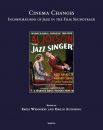
Cinema Changes (2019)
Incorporations of Jazz in the Film Soundtrack
Dir. Emile Wennekes et Emilio Audissino
After the Silents (2014)
Hollywood Film Music in the Early Sound Era, 1926-1934
Beyond the Soundtrack (2007)
Representing Music in Cinema
Settling the Score (1992)
Music and the Classical Hollywood Film
 Retour


