


Happiness and Tears, After Cavell
New Readings in Hollywood's Comedy of Remarriage and Melodrama of the Unknown Woman (livre en anglais)
Sous la direction de Paul Deb


 (0 vote)
Moyenne des votes :
| 0 | vote |  = On peut s'en passer = On peut s'en passer |
| 0 | vote |  = Bon livre = Bon livre |
| 0 | vote |  = Excellent livre = Excellent livre |
| 0 | vote |  = Unique / une référence = Unique / une référence |
Votre vote : -
Description de l'ouvrage :
Explores contemporary expressions of these two genres, and their continuing relevance, in recent Hollywood films.
Stanley Cavell's influential philosophical work on American cinema concerns itself with the thought that some of the most popular movies of Hollywood's Golden Age constitute two related, but previously undefined, genres that he names "the comedy of remarriage" and "the melodrama of the unknown woman," respectively. In this collection, the first devoted to the subject, leading figures in philosophy and film studies provide detailed readings of more recent Hollywood films that show how these two genres continue to be inherited in American cinema, not least by the films' participation in a certain moral outlook—concerning personal and cultural transformation—that Cavell calls "Emersonian Perfectionism." The films discussed include Rich and Famous, As Good as It Gets, My Best Friend's Wedding, Revolutionary Road, On the Rocks, Palm Springs, and Tenet.
À propos de l'auteur :
Paul Deb is Research Associate in Philosophy at New College, Oxford.
Revue de Presse :
"This collection demonstrates that Stanley Cavell's writings on films and cinema are more important now than ever. Key writers on Cavell offer comprehensive reflections on the nature and form of contemporary films, showing that his approach to cinema is essential for our understanding of the significance of film and its relation to philosophy." -- Richard Rushton, Lancaster University
Voir le site internet de l'éditeur State University of New York Press
> Sur un thème proche :
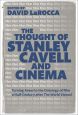
The Thought of Stanley Cavell and Cinema (2022)
Turning Anew to the Ontology of Film a Half-Century after The World Viewed
Dir. David LaRocca
Sujet : Théorie

 Retour