

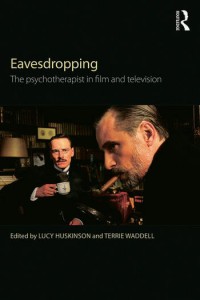
Eavesdropping
The psychotherapist in film and television (livre en anglais)
Sous la direction de Lucy Huskinson et Terrie Waddell


 (0 vote)
Moyenne des votes :
| 0 | vote |  = On peut s'en passer = On peut s'en passer |
| 0 | vote |  = Bon livre = Bon livre |
| 0 | vote |  = Excellent livre = Excellent livre |
| 0 | vote |  = Unique / une référence = Unique / une référence |
Votre vote : -
Description de l'ouvrage :
What can depictions of psychotherapy on screen teach us about ourselves?
In Eavesdropping, a selection of contributions from internationally-based film consultants, practicing psychotherapists and interdisciplinary scholars investigate the curious dynamics that occur when films and television programmes attempt to portray the psychotherapist, and the complexities of psychotherapy, for popular audiences.
The book evaluates the potential mismatch between the onscreen psychotherapist, whose raison d’être is to entertain and engage global audiences, and the professional, real-life counterpart, who becomes intimately involved with the dramas of their patients. While several contributors conclude that actual psychotherapy, and the way psychotherapists and their clients grapple with notions of fantasy and reality, would make a rather poor show, Eavesdropping demonstrates the importance of psychotherapy and psychotherapists on-screen in assisting us to wrestle with the discomfort – and humour - of our lives.
Offering a unique insight into perceptions of psychotherapy, Eavesdropping will be essential and insightful reading for analytical psychologists, psychoanalysts, academics and students of depth psychology, film and television studies, media studies and literature, as well as filmmakers.
À propos des auteurs :
Lucy Huskinson, PhD, is a senior lecturer in the School of Philosophy and Religion at Bangor University, UK. She is coeditor in chief of the International Journal of Jungian Studies and author and editor of numerous books and articles, including Dreaming the Myth Onwards: New Interpretations of Jungian Therapy and Thought (Routledge, 2009).
Terrie Waddell, PhD, is associate professor of Media: Screen and Sound at La Trobe University, Australia. She researches and publishes on the relationships among screen media, myth, literature, gender, popular culture, and analytical psychology. Wild/lives: Trickster, Place and Liminality on Screen (Routledge, 2010) is her most recent monograph.
Revue de Presse :
"An interesting investigation of the connections between film and therapy that focuses on the portrayed character and performance of the therapist, rather than on plotlines or therapeutic themes." - Colin Feltham, Therapy Today
‘There is a lack in psychoanalytic criticism as remarkably it has overlooked the figure of the therapist. This fascinating book redresses that situation. Looking at both fictional therapy and fictional therapists, and with a global view, the essays weave in and out of the consulting room. In so doing each contributor casts light on the representation of the therapist and therapy itself. This is a wonderful collection that offers a range of fresh perspectives - a much needed and insightful addition to psychoanalytic criticism that makes for compelling reading.’ - Dr Luke Hockley, Professor of Media Analysis and Psychotherapist, University of Bedfordshire, UK
"Eavesdropping is an interesting collection of essays that coversa a variety of themes relevant to thew ays in which psychotherapists and the process of psychotherapy are portrayed in film and television. One of the strengths of this book is that it takes both cinema and psychotherapy seriously, considering the challegnes, aims, and technical dilemmas of both endeavors. [...] [T]here is enough material here to provide a comprehensive discussion of the broader implications of portraying psychotherapists practicing their craft on the big screen." -James M. Hepburn, PsycCRITIQUES, 2014
> Des mêmes auteurs :

The Lost Child Complex in Australian Film (2019)
Jung, Story and Playing Beneath the Past

> Sur un thème proche :
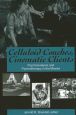
Celluloid Couches, Cinematic Clients (2004)
Psychoanalysis and Psychotherapy in the Movies
Dir. Jerrold R. Brandell
Sujet : Sociologie
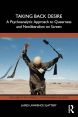
Taking Back Desire (2025)
A Psychoanalytic Approach to Queerness and Neoliberalism on Screen
Sujet : Sociologie

Psychoanalysis and Film (2024)
Methodical Approaches to Latent Meaning
de Timo Storck
Sujet : Sociologie
Psychoanalysis and the Small Screen (2023)
The Year the Cinemas Closed
Dir. Carol Owens et Sarah Meehan O'Callaghan
Sujet : Sociologie
Race, Racism and Political Correctness in Comedy (2021)
A Psychoanalytic Exploration
de Jack Black
Sujet : Sociologie
 Retour


