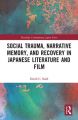


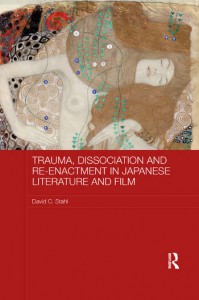
Trauma, Dissociation and Re-enactment in Japanese Literature and Film
(livre en anglais)
de David Stahl


 (0 vote)
Moyenne des votes :
| 0 | vote |  = On peut s'en passer = On peut s'en passer |
| 0 | vote |  = Bon livre = Bon livre |
| 0 | vote |  = Excellent livre = Excellent livre |
| 0 | vote |  = Unique / une référence = Unique / une référence |
Votre vote : -
Description de l'ouvrage :
Japanese literature and film have frequently been approached using lenses such as language, genre and ideology. Yet, despite a succession of major social traumas that have marked, and in many ways shaped and defined much of modern Japan, Japanese fiction and cinema have not often been examined psychoanalytically.
In this book, David Stahl conducts in-depth readings and interpretations of a set of Japanese novels and film. By introducing the methodology of trauma/PTSD studies, Stahl seeks to provide a better understanding of the insights of Japanese writers and directors into their societies, cultures and histories. In particular, by building on the work of practitioner-theoreticians, such as Pierre Janet and Judith Herman, Stahl analyses a number of key texts, including Kawabata Yasunari’s Sleeping Beauties (1961), Enchi Fumiko’s Female Masks (1958) and Imamura Sho- hei’s Vengeance is Mine (1979). Consequently, through using concepts of social trauma, dissociation, failed mourning, revenge and narrative memory, this book sheds new light on the psychological aftereffects and transgenerational legacies of trauma depicted in Japanese works.
Trauma, Dissociation and Re-enactment in Japanese Literature and Film will be of interest to students and scholars of Japanese Literature and Cinema, as well as those interested in Japanese History and Trauma Studies.
À propos de l'auteur :
David C. Stahl is Professor of Japanese Literature and Cinema at Binghamton University. His research interests are trauma/PTSD studies and artistic representation of social trauma and its aftereffects.
Revue de Presse :
"I believe that Stahl has chosen texts of the highest artistic value for his analysis. Each text displays an inimitably masterful stylistic formation as well as psychological and narrative depths that could puzzle the most experienced readers. What is more, these texts unflinchingly depict the numbing sense of immorality the main characters exhibit."
Hosea Hirata, Contemporary Japan, Vol 30, No 1 (2018), Tufts University
> Du même auteur :
> Sur un thème proche :
Film Viewing in Postwar Japan, 1945-1968 (2024)
An Ethnographic Study
Transcendence and Spirituality in Japanese Cinema (2024)
Framing Sacred Spaces
Japanese Filmmakers in the Wake of Fukushima (2023)
Perspectives on Nuclear Disasters
Japanese High School Films (2023)
Iconography, Nostalgia and Discipline
Cinema of Discontent (2023)
Representations of Japan's High-Speed Growth
Prostitutes, Hostesses, and Actresses at the Edge of the Japanese Empire (2023)
Fragmenting History
 Retour